Big news! Tarot readings now offered

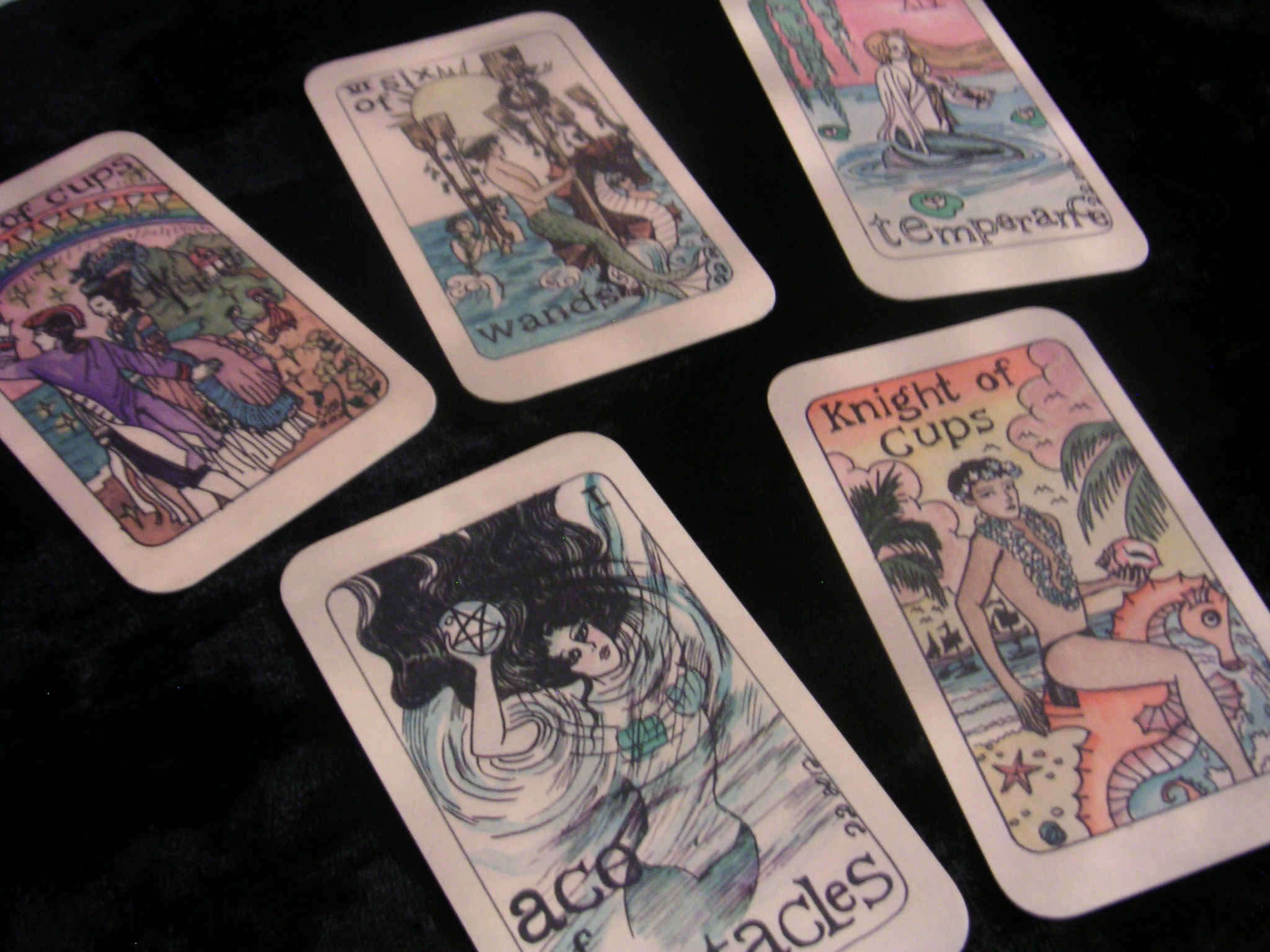
I’m very happy to announce that I’m now offering tarot readings through my Etsy shop, Coffee At Midnight. I started reading tarot when I was twelve years old (yes, really!) and I have over twenty years of tarot study and practice. I began reading professionally at 18 and have read at Pagan Pride Festivals, psychic fairs, and metaphysical shops in addition to one-on-one private readings for clients. MINOLTA DIGITAL CAMERA I’m offering a five card reading for $25. Your reading will include a detailed interpretation speaking to directly to your concerns in addition to photographs of the cards drawn for you. The five card spreads I do are able to speak to a range of concerns touching on emotional, practical, and spiritual matters. An intersection of material and spiritual forces can be mapped out to clarify circumstances that you find yourself in. A spread arranged according to elemental influences can uncover imbalances of power regarding a particular situation. The five states of being – mental, physical, emotional, spiritual, and ancestral can also be assessed with this direct reading.

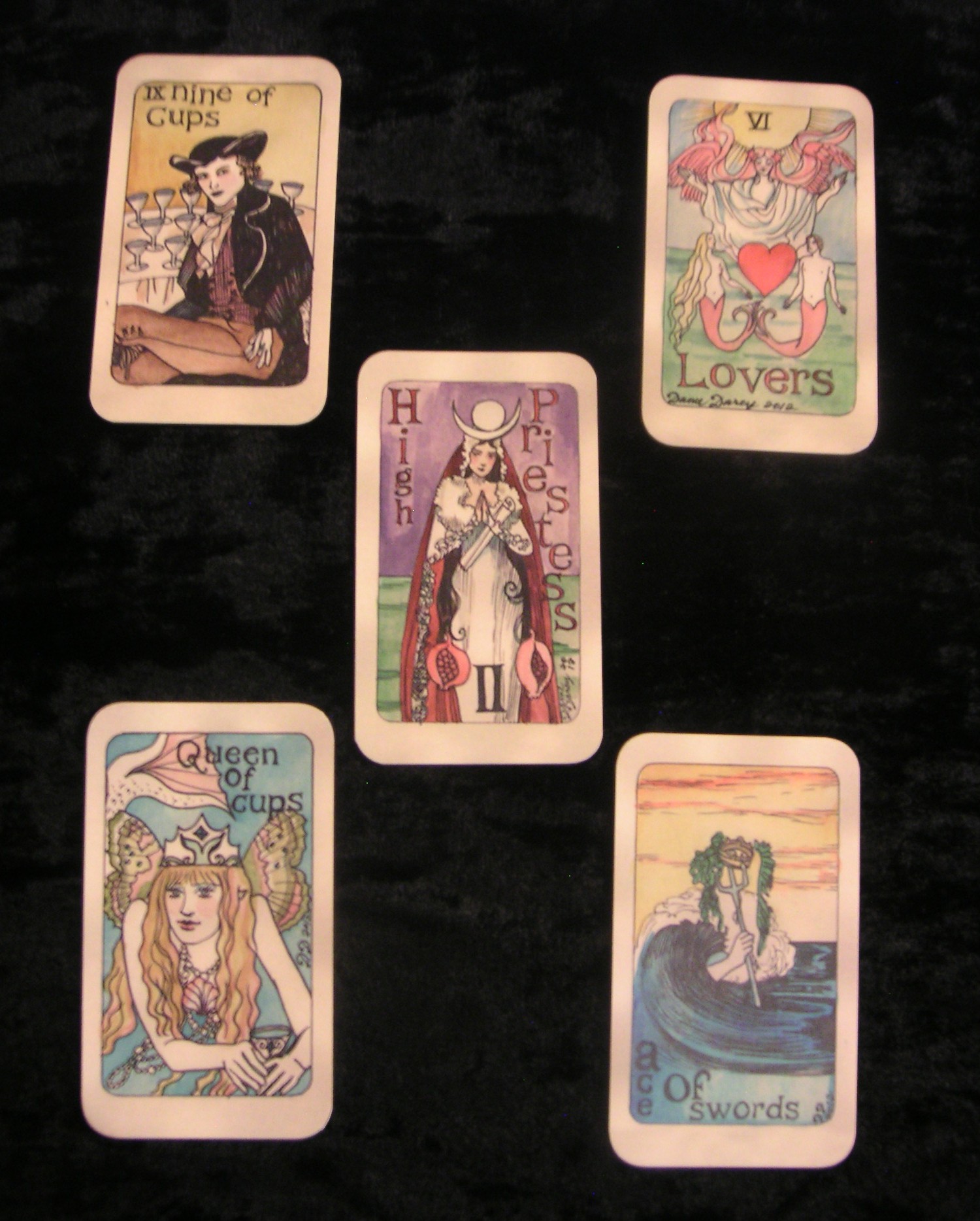
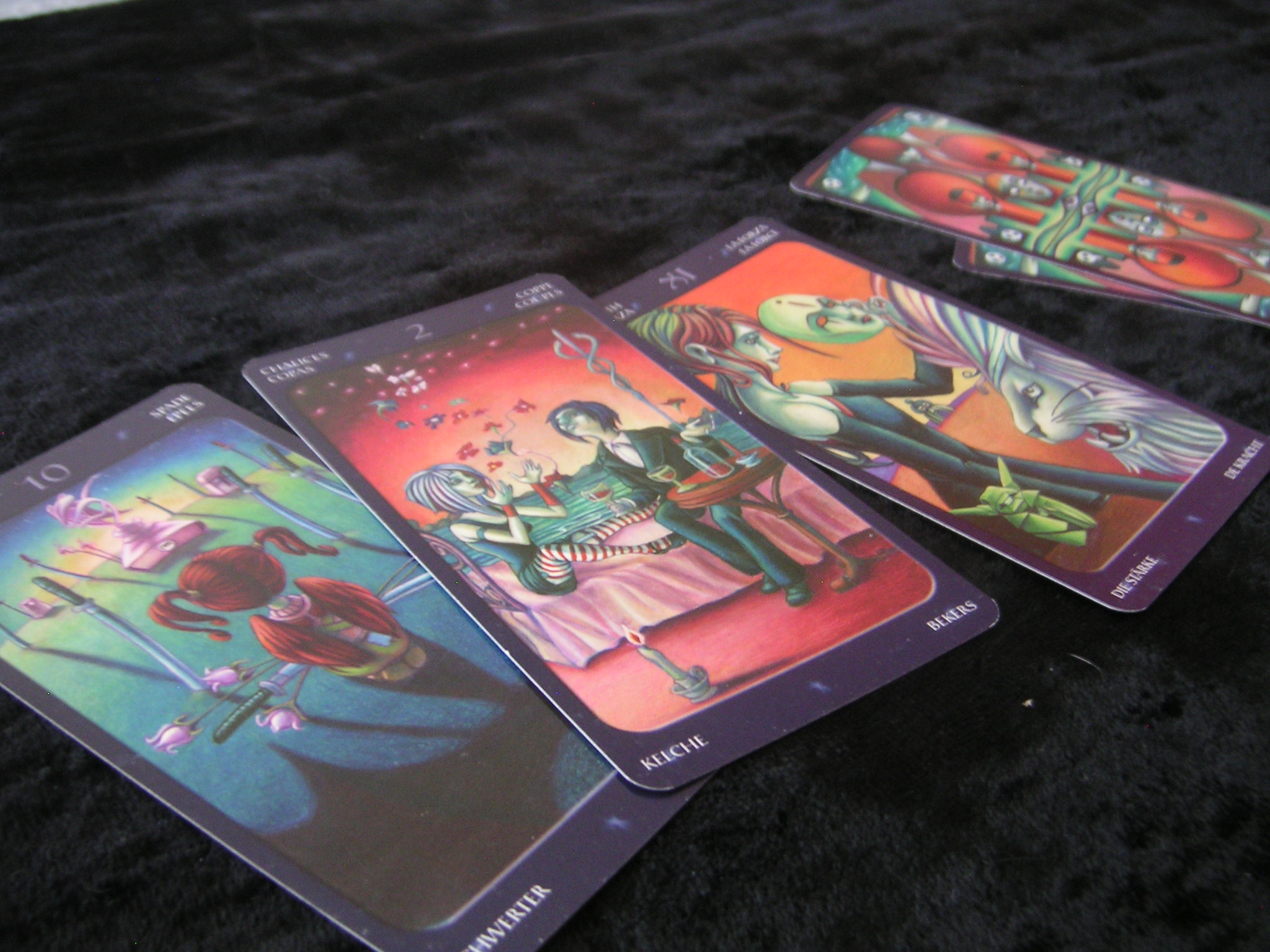
I am currently reading with The Mermaid Tarot with art by the incomparable Dame Darcy. (Pictured at the top and to the right.) Dame Darcy’s art is deeply influenced by her magical lifestyle. This deck is full of powerful, watery imagery that deftly addresses concerns of an emotional, intuitive, and spiritual nature while also speaking to concrete, practical matters. It is a colorful, feminine deck that helps bring up the treasures of one’s spiritual and mental depths. Interested in a reading with a different deck? I also read with The Tarot of the Sweet Twilight, a darkly whimsical and intuitive deck based on the Rider-Waite-Smith system. You can see a sample of this deck below. It is filled with fae creatures and is ideal for readings regarding a range of liminal concerns. MINOLTA DIGITAL CAMERA

Introducing Andal (Reblog of Apotheosis: The Theological Problems)

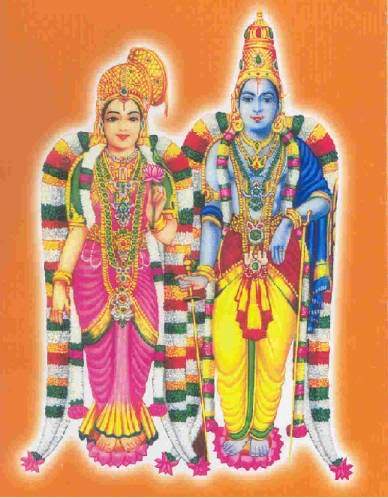
Apotheosis isn’t a subject that came up spontaneously in my own study and practice; it was an idea I encountered specifically from Hellenic polytheists and from people who (like myself) count members of this community among our friends. I recognized the stories cited as apotheosis narratives but I had little investment in them as sources of emotional or spiritual guidance. That is, not until I remembered that I did in fact have an apotheosis narrative that I did hold dear to my heart: the story of Andal.andal1
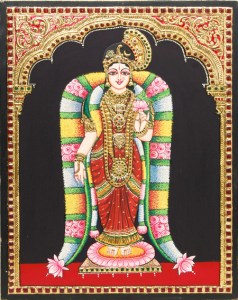
Andal (sometimes spelled Antal) is a goddess from the Tamil Hindu tradition but the stories we know about her are specifically about her life as a human being. Of the many reasons she is celebrated, the fact of her physical, embodied human existence is one of the most endearing and enduring. I held onto this story as an example of sacred marriage and as an example of the mortal spouse ending up with a retinue of spirits that regarded her as a queen. It’s also a very sweet love story that deserves a wider audience.

As a child, Andal was named Kodhai. She was found in a bush or lying against the earth (an image reminiscent of Sita, who sprang up from a furrow of plowed ground). Her father was a garland maker; his job was to make the long garlands of fresh flowers used in temple worship and he named his daughter after these strands. Kodhai/Andal grew up watching the worship of Vishnu and a great love for the god was awoken in her heart. Privately, she began wearing the garlands that would be offered to Vishnu. Using an item intended for offering is against the rules of ritual but Kodhai was very attached to Vishnu. (It’s also important to note that certain ancient cultures on the subcontinent had marriage customs wherein a princess would select her suitor by placing a garland of flowers around his neck after taking it off herself. This story has strong connotations of royalty and of feminine agency.)

Eventually Kodhai’s father discovered what she was doing and reprimanded her. That night, Vishnu himself appeared to the garland maker in a dream, saying that the garlands offered from Kodhai’s very own body were even more precious to him. Chastised by the god of the temple, the garland maker allowed Kodhai to continue her idiosyncratic worship.

Andal’s mortal life included the composition of the Tiruppavai and the Nachiar Tirumozhi. The Tiruppavai in particular is still highly popular and annual recitations of the work are common in Tamil-language regions of India.
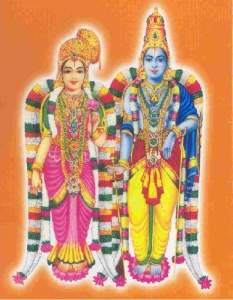
Andal2The marriage ceremony initiated by Andal’s gift of the garland culminated with a formal wedding. She had dreams of Vishnu, including one charming account wherein all the many, many forms of Vishnu bickered with one another to determine which of them she would choose to marry. (She ended up marrying the form of Vishnu specifically identified with the temple her garlands were offered at.) At the very end of her story, Andal passes from a strictly human sphere into one inhabited by spirits, who now regard her as a queen. Her narrative fades at this point and she becomes fixed in the heavenly realm as the deified mortal bride of the Lord of the Three Worlds.

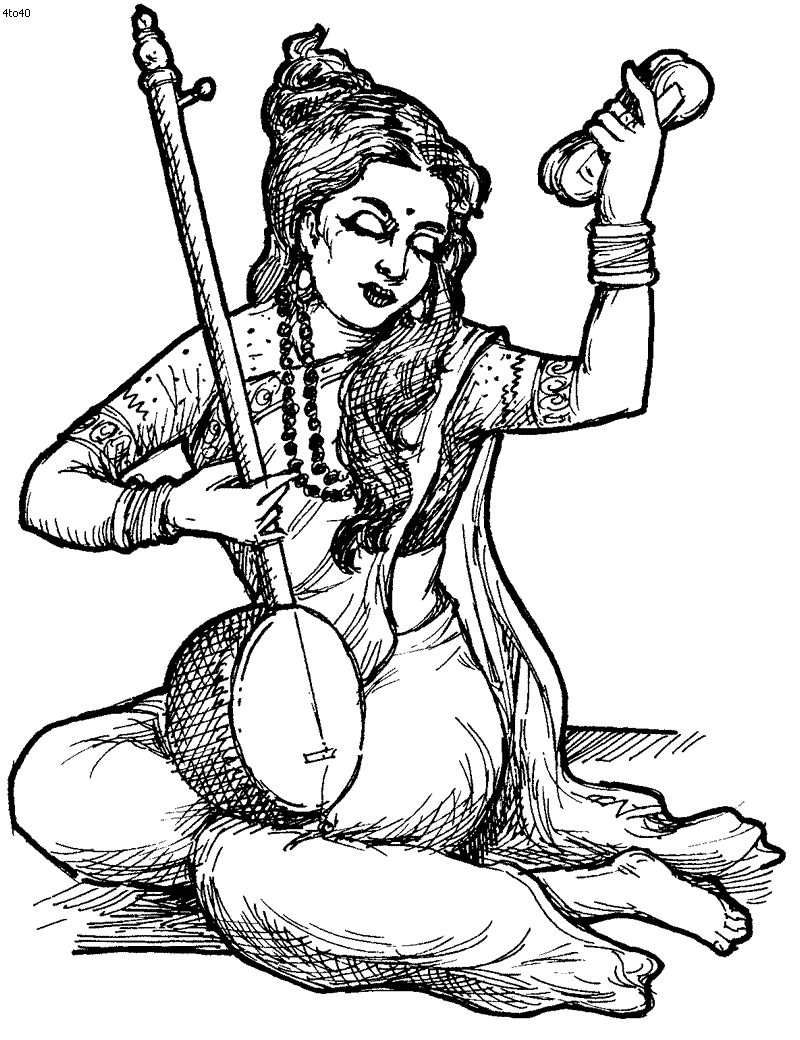
Sri Andal and Mirabai are often spoken of in the same breath. Both are mortal women with a historic reality; both composed emotive and intimate songs of praise and longing in their regional languages. Both are now celebrated in the regions they came from and far beyond. Both loved and lived in a Vaishnava context. Both regarded a god as their one and only husband and both chose that husband according to their own desires. And interestingly, both of their stories essentially come to a halt at the end of their lives. (I wouldn’t be surprised if there are stories about Andal’s actions as a goddess or about her intercession on behalf of worshipers; I’m simply not aware of any. Similarly, Mira’s identity as a saint is based on her life narrative and not on any particular supernatural healings or interventions attributed to her after her passing.) However, Andal has become a goddess while Mira has remained fixed in the human realm. Mira is remembered for her passion and for her devotion against all odds; Andal is remembered for her marriage and apotheosis. Mira is a princess that became a wandering saint; Andal started life as the daughter of a tradesman and became a divine queen.

I’m not able to solve the mystery of apotheosis. I don’t have a convenient way to explain why two stories with so many similarities have such radically different outcomes. Perhaps a clue exists in the way that these women’s assertions were regarded by others. Mira encountered continual conflict with her extended family and because of her social position; Kodhai’s father eventually came to believe her and helped her express her sacred relationship in ways meaningful to their immediate community. Kodhai’s story also includes various levels of divine intervention that aren’t as evident in Mira’s. Miracles are credited to Krishna when he saved Mira from poison and from a snake, but I can’t recall a narrative that has him talking to other people on her behalf.

I rather wonder if apotheosis is a solution to a problem that we as humans aren’t quite able to see.

The ascension of a new divinity doesn’t involve the overthrow of an old one; if anything, it fleshes out the landscape of divinity to meet varying needs of humanity. It’s entirely possible that we as a species had some spiritual need for one of our own among the High Ones; Ariadne and Andal and others might have just been right for the job. That said, I personally find more succor from visage of Mirabai, who had so few fucks to give for anything that wasn’t her lord than I do from Andal and her court of spirits. I am charmed and deeply touched by the idea of many Vishnus arguing over who gets to marry Andal, but I am in awe of Mira’s plaintive sacrifices.

(If you’re interested in learning more about Andal, I’d suggest downloading “Legends of the Goddess: Antal Stories in the Srivaishnava Tradition”, the May 8, 2013 episode of the Oxford Center for Hindu Studies podcast, and just doing a little reading online. The Wikipedia entry is nice. You can also find copies of the Tiruppavai and Nachiar Tirumozhi online and in print. Today, Andal is counted as one of the twelve Alvar saints of the Tamil Vaishnava tradition and the only woman.)
Thenea's avatarMagick From Scratch

Recently, I have been doing an in-depth study of apotheosis. For the Hellenic Pagan (and possibly for others, though I would not know), apotheosis is an interesting topic because it can help us to understand that difference between humans and deities. It is also an extremely difficult concept to tackle from the perspective of Hellenic theology, because the implications of it are difficult to think about.

Difficult Concept 1: Gods are people, and People aren’t so different from gods. 

This isn’t just a modern problem. Apotheosis represents a contradiction in ancient Polytheistic Theology also. In ancient times, believing that the difference between a deity and a human has to do with wisdom and virtue (qualities usually hard earned through life experience) was a totally normal thing. In the Hymn to Demeter, for example, Kallidike says to the disguised Demeter:

“Old Mother, we humans endure the gifts the gods give us…

View original post 2,431 more words

A Thousand Ways: Exploring Devotional Ritual (Pantheacon 2015)

I’ve been quite for a couple weeks because work has been busy and I’m trying to get everything squared away for my trip to San Jose. If you’d like to learn more about my session, check out the Facebook event page I’ve created for it. https://www.facebook.com/events/1555842608008750

I’m excited to be returning as a presenter for the second time and I hope to catch up with several folks and meet lots of new people. I’ll have a couple copies of my book for sale following the session if you’d like a copy.

With any luck I’ll catch up on an entry or two before I leave. I might even have some energy to make a post during the weekend. We’ll see how it goes.

Oh, and pretty soon I’ll announce the release info on a new book project I’ve been backburner-ing for some time. It’s not the followup to Heartroad (yet!) but it is the first major publishing effort I’ve made in the  last, erm, seven years.

big flyer flat

Questions about marrying gods or spirits?

This is a signal boost for a project I’m pleased is happening (there are multiple books in the works on the topic of sacred marriage, in fact). There is considerable misunderstanding on the topic of sacred marriage within a pagan and polytheist context despite (or hell, perhaps because of) historic and mythic precedent for such expression within our various traditions. This configuration is both a paradigm of relationship and a complex engine of spiritual development that has the potential to create both highly refined and very unexpected and unusual outcomes in one’s private religious life. It is both self-justified (existing for its own sake) and undertaken for reasons beyond the personal.

No single volume will be able to capture the fullness of this particular spiritual expression because it is a phenomenon being currently practiced and furthered here, today, now. We are learning more and more about it simply because it is a practice emerging and being rediscovered. Though I strongly believe that devotional practices and expressions don’t need to have their value justified, an clear exploration of these topics is valuable to people seeking a greater understanding.

You have questions? This is a good opportunity to ask them of people who are willing to answer.

Naiadis's avatarStrip Me Back to the Bone

I haven’t talked about it because I’m a tad superstitious when it comes to talking about writing projects before a certain amount of work has gone into them, but Beth has talked about it, so why not?

We’re writing a book on Sacred Marriage.

(Most important to note: we’re writing a book on our experiences of being godspouses for the last decade and then some. We are writing the book we wish had been when we started upon this path. It is not meant to be an authoritative “this is how you must do it” book — anyone who reads our blogs or knows us online should hopefully know by now that that’s not how we roll. We are far more in the “this is what works for us,” camp.)

Part of the book will be addressing questions, so if you have any to ask, now’s your chance! I’m not saying…

View original post 130 more words

Catching up on comments – soon

I’ve been quite busy for more than a week now and have had to scale back my blogging time. I’ll be getting to some of the comments that have stacked up in the meantime and try to make a couple new posts. On the other hand, I might get handed another big batch of work by one of my editors and another plumbing fixture in my apartment might break. We’ll simply have to see how it goes.

Thanks for sticking with me. Have some Meera.

8

The Astral and You: Finding Your Astral Self

The subject of the astral self is one that has gotten shamefully little explanation within esoteric polytheism. Even among spirit workers this subject can be frequently taboo for frustratingly complex and ambiguous reasons. Yes, individuals had and have very good reasons for not talking openly about these things. There is immeasurable pain bound up in the astral lives of those who have gone before you, before me, before those I have learned from, and before those they have learned from. When a person begs for information on the nature of the astral self, they beg to hear about intimate traumas, betrayals, and failures.

But –

The pain that I, my teachers, and their teachers have endured in our astral aspects does not negate the very real suffering that people experience as they emerge into a fuller awareness of their potential as astral beings. These are growing pains that have been suffered alone and silently for generations and I’m sorry that you’ve inherited such a dearth of useful information. It’s because your ancestors in the Work have been traumatized, sometimes beyond reasonable recovery. Take a look at the threads, if you’re able. Take a look at this heritage and you will see a legacy of muted misery endured in solitude. You will see how cruel the gods can be.

But –

This is changing. The evolution pressed forward by the efforts of these elders has emerged and different outcomes are now possible. There is a greater willingness to talk about the things that happen to the astral self and there is a growing awareness that these things are real and that they have distinct impacts on the portions of the self that aren’t specifically astral.

Me, my teachers, their teachers, and their teachers weren’t the ones to record the lessons of the astral self. Yeah, there’s information out there for the finding but it’s skimpy and ultimately not terribly helpful except for providing a few dozen words to echo your private experiences. The need outweighs what’s currently available. If the mystics and Workers and devotionalists and magicians and seekers who have more recently entered this current combine what they know and shake off the trauma-bound reluctance of the past, a body of knowledge can be created that may help to boost this emerging stage.

So I’m suggesting that you talk amongst yourselves. I can’t, won’t, and don’t wish to contribute to this conversation at this point (or, let’s be honest, ever). But I will encourage the conversation to continue because this knowledge has the potential to relieve the suffering of the future.

Love and Deity

This blog post by Heather gave me the push I needed to write a bit about something that’s been on my mind recently. Though deities associated strongly with love (Heather cites Freya in particular) are typically spoken of as having concern for romantic love above all, I’ve found that they can be powerful allies in a much broader range of emotional matters than we humans might give them credit for.

One good example of this concern for a variety of emotional concerns is found in Aphrodite’s extensive list of titles. These titles both celebrate Her as a distinctive and worthy entity but also address the many facets of affection and shades of love She is concerned with. (A nice list can be found here: http://www.theoi.com/Cult/AphroditeTitles.html)

Anyone who is familiar with Powers known generally as “God/desses of love” is well-aware (and no doubt tired of) the horny, pleasure-seeking Celestial surrounded by cartoon hearts. I’d like to think that my fellow polytheists are above such crass generalizations but if I’ve been guilty of it (and I have) than I know I’m not alone. Getting to know these Powers in the very small way I have has changed the way that I approach my emotional life, and my emotional relationships with the Powers closet to me.

Powers like Lalita Tripura Sundari, Babalon, and the feminine Loki are not Love Goddesses(TM) per se. Even Kamakhya is not a love goddess in the mold we might be familiar with (though Her blessing is petitioned in a range of love-related incantations and rituals). They are personalities concerned with power, especially the power expressed by and through pleasure, beauty, and attraction. Love is, in a way, an orientation, a kind of magnetic north of the soul that draws us towards the source of that magnetic emanation. Love is an active longing and evidence of desire. Our natural inclination towards emotional engagement can be pressed into the service of virtually any goal; that is, we can fall in love with whatever we choose to focus strongly on. This mysterious self-propulsion/drawing-us-toward is one manifestation of the power of Love Goddesses(TM).

We love what we are attracted to and we are attracted to what we love. It’s simple, right? Well, like many spiritual principles its simplicity manifests in excruciatingly complex ways. Getting ourselves strongly oriented towards the thing we really want to focus on is the work of a lifetime. These Powers can be very important allies in this work, even to people like me who end up surrounded almost entirely by Powers associated with death and chaos. But hey, at least my wagon of chaos n death is well-decorated these days.

Final batch of little blank books

I just finished posting the last two little blank books on my Etsy shop. I began making these very suddenly earlier this year. I’ve been curious about bookmaking for a while but then boom, it just happened. I’ve learned a lot – both about bookmaking and about myself. I very much want to continue exploring this particular art form but first the old things need to leave home so new items can grow in their place.

MINOLTA DIGITAL CAMERA

The last few weeks have been a bit rough on all fronts but medically things are a little brighter (or perhaps the sun is just reflecting off all the snow that’s dropped on the valley in the last few days). Soon I’ll talk about some of my big ambitions for 2015 and we’ll see exactly what happens next. Thanks as always for all the support. You’ve all helped me get to this place.

When Heathen Gods Crash Your Roman Holiday

Several years ago I had to say goodbye to my love. I had to let Him go without any promise or guarantees that I’d ever see Him again. Someone told me at the time that learning to be alone, truly alone without Him would be the hardest thing I ever do. So far I think that’s been a fair assessment, and that’s with a heaping load of sorrow from all kinds of sources. I suffered. I suffered in a way that people who have never loved the Gods can never understand.

They leave sometimes. Sometimes we’re the ones who leave. Separation is part of this road; indeed, the experience of separation is what drives us forward on the path to greater and more profound forms of unity. The awareness of separation is the beginning of communion. But none of this actually makes it easier. Losing the grace of presence freely given is a loss unique and precise in its injury.

My dear friend (Camilla and others like you), you will hurt and I am sorry. I know this pain. I can promise you that there are secrets inside this pain that can only be discerned by going deep and coming back out on the other end. Let the power of the promises you made carry you through this. Learn new ways to love and don’t let yourself become too cold. I’m sorry but I can promise that (redacted by the Gods). I can promise that you haven’t been forgotten. (There! They’ll let me say that part!)

Camilla Laurentine's avatarFoxglove & Firmitas

Or: A Spirit-Worker’s Year in Review

I haven’t written much about the way Odin has really turned my world upside down in the last year. Not a lot, at least. I think partially, because I’m not really sure where it’s going in regards to where I fall within a religious practice. I think, perhaps, in my private practice I’m coming to terms with simply being a Pagan and Polytheist without a cultural descriptor ahead of it. But I’m not there yet. It’s funny to me that I’ve spent so many years debating the usage of Roman in my label that shortly after finally accepting it, I would be clinging to it and uncomfortable leaving it behind while Gods scream in my ear “Go Heathen, go Gaul, go somewhere else…”

December 17th was the beginning of Saturnalia, which was the first Roman festival I ever celebrated. But last year at…

View original post 2,742 more words