The Loki Cord

I’ve admired my friend Beth’s handmade ritual cords for quite some time. I love fiber arts and I’ve had the pleasure to watch her skill and artistry develop for many years. I knew I wanted a custom ritual cord dedicated to Loki and I knew I wanted to take it to PantheaCon with me. I was nervous about being away from home for some long; I’m a bit reclusive and have to manage a spectrum of chronic illness symptoms and I prefer to be home when I don’t feel well. I thought that having something emotionally and spiritually meaningful with me during my trip would help and Beth was happy to work with me.

MINOLTA DIGITAL CAMERA

I chose to get a custom cord instead of a premade one. The customization process includes a design consultation regarding colors and detail elements, including charms and stone beads. The cord arrived in time for me to leave and I was overjoyed to take it with me.

My cord there in the picture has been carried on airplanes, through hotels, handled by convention goers, and draped on the altar. It’s had soap, soup, water, and other stuff splashed on it. One end got singed on a candle. You can see how some of the ends are felting. Yours will naturally arrive in pristine condition but I can promise that yours, like mine, will become even more precious and beautiful with use.

This cord is very special to me. It magnifies My Lord’s presence here and when I wear it I feel like I’m being hugged on the inside. I’m so touched to have something that Beth worked hard on and her care and consideration shows at every level.

If you’d like to see Beth’s many current offerings, visit her Etsy shop; you can skip directly to her current ritual cord listings here. If you’d like to learn more about her custom ritual cords, this is the link you want.

Coming to Compassion (Pagan Experience Project Feb. week 4; C is for…)

If you had told me many years ago that compassion would become a central part of my religious life, I might not have believed you. This was not a concept strongly present in any of the traditions that provided a foundation for my spiritual life; nor was it really central to any of the traditions I found myself exploring as my spiritual life unfolded.

I came to compassion like many other people do – as a direct result of profound personal suffering. This is perhaps the first thing to understand about compassion; it’s not a concept that others can tell you is valuable. You have to come to this realization on your own, through direct experience of the constellate emotions that reveal its boundary.

My spiritual life has been endlessly rich and possessed of intense, profound value. It has also been the source of a degree of suffering I didn’t imagine myself capable of enduring. Experiencing those heartbreaking depths was arguably necessary for growth but the months and years of saturated distress broke me. I very gradually came to understand – really understand – that I wasn’t alone in this suffering. What I was feeling wasn’t actually unique. It was personal, but it wasn’t unique to me. Everyone on earth, all sensate beings incarnate or not, also suffered with a pain and distress as deep and immediate as my own. The causes of their suffering might be known or unknown to me, might appear to me to be greater or lesser in effect than the causes of my own experience, but these things weren’t actually that important. What was important in that moment was the realization that I was not alone. Neither, for that matter, was anyone else.

This realization has unfolded to include many nuances and further realizations. For instance, my empathy and compassion are not dependent on my intellectual understanding of another’s distress; nor should they be. Knowing that my own distress and any resultant traumas are real is enough; after all, I am not alone in these experiences. Valuating the relative impact of another person’s experience of distress and suffering is also unimportant. These subjective experiences are difficult (or impossible) to objectively measure. No tick on a number line should determine how much I care. Though I am limited in material resources and in terms of personal resilience, and though I’m also limited by whether or not another person needs, desires, or even wants action motivated by compassion, none of these things diminish the reality we all experience.

I am not very literate in the subject of compassion and nor have I studied its philosophies very deeply. I’ve relied on my personal experiences and my observations to teach me what I need to know though eventually I need to delve a little deeper into the subject because I can’t always come up with answers on my own. There are questions I have that I might someday be able to figure out but masters and teachers and guides exist for a reason.

Though I strongly believe in the value of compassion and have found it to be of great practical use, I do still struggle with it. There are many circumstances when it seems like it simply doesn’t make any difference or that my mental and emotional energy would be better spent by getting angry or going on the offensive. Sometimes I feel like “having compassion” is used as a mask for bland platitudes and meaningless sentiment. Sometimes being told that someone has compassion for me is cruel. “Do you?” I feel like asking, “Do you really suffer with me in this matter? Or are you simply trying to tell me that you pity me, that you feel sorry for me, that you believe I deserve to feel anguish because of the choices I’ve made?” Compassion is not a simple subject and its expressions are immense and complex.

I find myself wary and weary of the rhetoric of violence. This is only one possible frame for categorical tensions, whether these tensions exist between the groups people align themselves with or between other axes of alignment. This might be strange coming from someone with a Heathen bent. I did after all spend a number of  years trying to fit into that community, I worship Gods who come from that context, and it is the tradition (rather broadly speaking) that taught me my spirit work. It’s also a tradition rather known for celebrating the trappings of violent conflict. Though I understand that these things are frequently celebrated in a historical context – modern Heathens celebrate the bravery and valor of our personal and collective ancestors – perhaps other parts of this tradition’s historic heritage are also worthy of celebration. It’s possible to be known as a tradition of explorers, artists, farmers, and yes, even householders. These are things best served by diplomacy, negotiation, and conflict resolution.

Arriving at a point where I value and celebrate compassion by no means indicates that I’m “good” at it. I’m not. I’m repeatedly forced to confront the trauma I’ve endured reflected back in the experiences of others. I respond by withdrawing and internalizing my pain. I hold this value close to my heart and will still choose actions that lack its mediating influence. I’m still mean, I still choose the lower road, I still take actions that I’d counsel others not to take. I still step into the sphere of others’ emotional lives and feel offense on their behalf; this leads me to dislike and mistrust others when I have no personal reason for doing so and the result is the loss of a compassionate stance.

I am heartened that I have endless opportunities to practice compassion in all its manifold expressions. This, like many other things in my life, is a sadhana, a spiritual practice undertaken for the refinement of the self in this and other worlds. Sadhana pares down the bullshit through discipline and reveals its strength with repeated application. Compassion is a powerful force and it drives an evolution that is reshaping me to the very core.

http://thepaganexperience.com

My Life’s Top Priority

Almost fifteen years ago I gave oaths of loyalty, service, and affection to My Lord. This undertaking had more steps than I anticipated. When I first decided, “Yes, this is something I’m going to do”, He stopped me. My heart wasn’t in the right place. My motivation wasn’t right.

But isn’t this right? I asked. This is what you wanted from me. I’m just doing what you asked me to.

That was the problem and that was my very first lesson.

Continue reading

Powers in my life: Saint Death (Pagan Experience Project Feb week 3)

santamuertaLooking back over my blog I’m noticing a very heavy emphasis on the Hindu side of things, which might suggest that this is a dominant force in my religious life. It’s actually not, at least not on a day to day basis. There are some devotions and observances I maintain and I’ll eventually get to those but at most I regard myself as a student of this collection of traditions, not as a member or participant.

I’ll start by talking about the Power in my life with the most controversy. Interestingly enough, that Power is not Loki.

Continue reading

Introducing Andal (Reblog of Apotheosis: The Theological Problems)

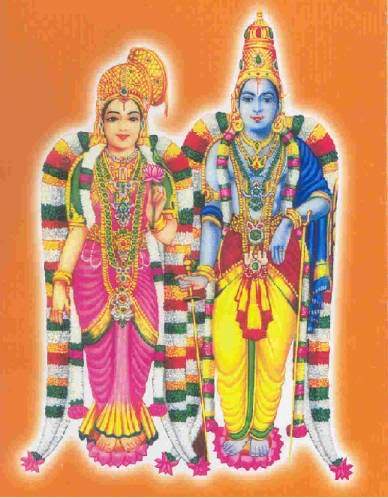
Apotheosis isn’t a subject that came up spontaneously in my own study and practice; it was an idea I encountered specifically from Hellenic polytheists and from people who (like myself) count members of this community among our friends. I recognized the stories cited as apotheosis narratives but I had little investment in them as sources of emotional or spiritual guidance. That is, not until I remembered that I did in fact have an apotheosis narrative that I did hold dear to my heart: the story of Andal.andal1

Andal (sometimes spelled Antal) is a goddess from the Tamil Hindu tradition but the stories we know about her are specifically about her life as a human being. Of the many reasons she is celebrated, the fact of her physical, embodied human existence is one of the most endearing and enduring. I held onto this story as an example of sacred marriage and as an example of the mortal spouse ending up with a retinue of spirits that regarded her as a queen. It’s also a very sweet love story that deserves a wider audience.

As a child, Andal was named Kodhai. She was found in a bush or lying against the earth (an image reminiscent of Sita, who sprang up from a furrow of plowed ground). Her father was a garland maker; his job was to make the long garlands of fresh flowers used in temple worship and he named his daughter after these strands. Kodhai/Andal grew up watching the worship of Vishnu and a great love for the god was awoken in her heart. Privately, she began wearing the garlands that would be offered to Vishnu. Using an item intended for offering is against the rules of ritual but Kodhai was very attached to Vishnu. (It’s also important to note that certain ancient cultures on the subcontinent had marriage customs wherein a princess would select her suitor by placing a garland of flowers around his neck after taking it off herself. This story has strong connotations of royalty and of feminine agency.)

Eventually Kodhai’s father discovered what she was doing and reprimanded her. That night, Vishnu himself appeared to the garland maker in a dream, saying that the garlands offered from Kodhai’s very own body were even more precious to him. Chastised by the god of the temple, the garland maker allowed Kodhai to continue her idiosyncratic worship.

Andal’s mortal life included the composition of the Tiruppavai and the Nachiar Tirumozhi. The Tiruppavai in particular is still highly popular and annual recitations of the work are common in Tamil-language regions of India.

Andal2The marriage ceremony initiated by Andal’s gift of the garland culminated with a formal wedding. She had dreams of Vishnu, including one charming account wherein all the many, many forms of Vishnu bickered with one another to determine which of them she would choose to marry. (She ended up marrying the form of Vishnu specifically identified with the temple her garlands were offered at.) At the very end of her story, Andal passes from a strictly human sphere into one inhabited by spirits, who now regard her as a queen. Her narrative fades at this point and she becomes fixed in the heavenly realm as the deified mortal bride of the Lord of the Three Worlds.

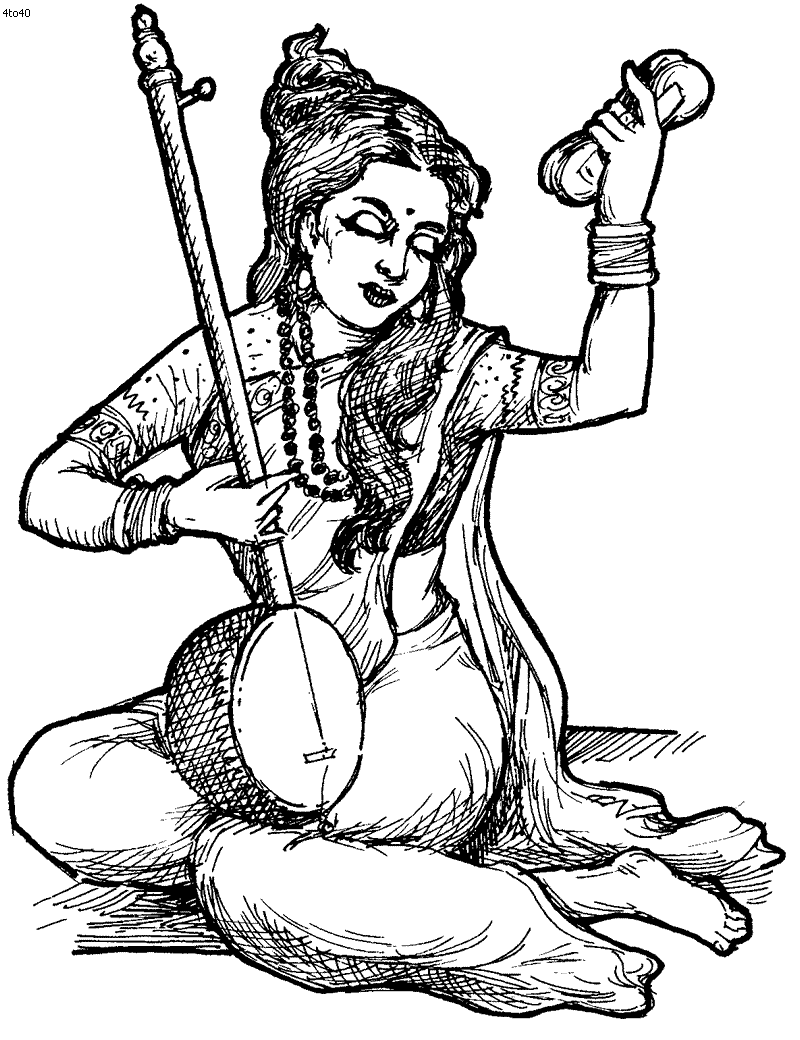
Sri Andal and Mirabai are often spoken of in the same breath. Both are mortal women with a historic reality; both composed emotive and intimate songs of praise and longing in their regional languages. Both are now celebrated in the regions they came from and far beyond. Both loved and lived in a Vaishnava context. Both regarded a god as their one and only husband and both chose that husband according to their own desires. And interestingly, both of their stories essentially come to a halt at the end of their lives. (I wouldn’t be surprised if there are stories about Andal’s actions as a goddess or about her intercession on behalf of worshipers; I’m simply not aware of any. Similarly, Mira’s identity as a saint is based on her life narrative and not on any particular supernatural healings or interventions attributed to her after her passing.) However, Andal has become a goddess while Mira has remained fixed in the human realm. Mira is remembered for her passion and for her devotion against all odds; Andal is remembered for her marriage and apotheosis. Mira is a princess that became a wandering saint; Andal started life as the daughter of a tradesman and became a divine queen.

I’m not able to solve the mystery of apotheosis. I don’t have a convenient way to explain why two stories with so many similarities have such radically different outcomes. Perhaps a clue exists in the way that these women’s assertions were regarded by others. Mira encountered continual conflict with her extended family and because of her social position; Kodhai’s father eventually came to believe her and helped her express her sacred relationship in ways meaningful to their immediate community. Kodhai’s story also includes various levels of divine intervention that aren’t as evident in Mira’s. Miracles are credited to Krishna when he saved Mira from poison and from a snake, but I can’t recall a narrative that has him talking to other people on her behalf.

I rather wonder if apotheosis is a solution to a problem that we as humans aren’t quite able to see.

The ascension of a new divinity doesn’t involve the overthrow of an old one; if anything, it fleshes out the landscape of divinity to meet varying needs of humanity. It’s entirely possible that we as a species had some spiritual need for one of our own among the High Ones; Ariadne and Andal and others might have just been right for the job. That said, I personally find more succor from visage of Mirabai, who had so few fucks to give for anything that wasn’t her lord than I do from Andal and her court of spirits. I am charmed and deeply touched by the idea of many Vishnus arguing over who gets to marry Andal, but I am in awe of Mira’s plaintive sacrifices.

(If you’re interested in learning more about Andal, I’d suggest downloading “Legends of the Goddess: Antal Stories in the Srivaishnava Tradition”, the May 8, 2013 episode of the Oxford Center for Hindu Studies podcast, and just doing a little reading online. The Wikipedia entry is nice. You can also find copies of the Tiruppavai and Nachiar Tirumozhi online and in print. Today, Andal is counted as one of the twelve Alvar saints of the Tamil Vaishnava tradition and the only woman.)

Thenea's avatarMagick From Scratch

Recently, I have been doing an in-depth study of apotheosis. For the Hellenic Pagan (and possibly for others, though I would not know), apotheosis is an interesting topic because it can help us to understand that difference between humans and deities. It is also an extremely difficult concept to tackle from the perspective of Hellenic theology, because the implications of it are difficult to think about.

Difficult Concept 1: Gods are people, and People aren’t so different from gods. 

This isn’t just a modern problem. Apotheosis represents a contradiction in ancient Polytheistic Theology also. In ancient times, believing that the difference between a deity and a human has to do with wisdom and virtue (qualities usually hard earned through life experience) was a totally normal thing. In the Hymn to Demeter, for example, Kallidike says to the disguised Demeter:

“Old Mother, we humans endure the gifts the gods give us…

View original post 2,431 more words

Shikhandi and Other Tales They Don’t Tell You (by D. Pattanaik) (The Bhakti Bookshelf)

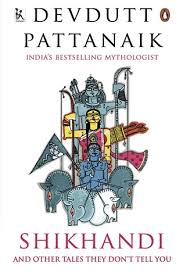
Devdutt Pattanaik is a prolific writer in the Indian and international markets best known for collecting and retelling popular and lesser-known stories from the Hindu tradition. I first encountered his work in The Man Who Was a Woman and Other Queer Tales of Hindu Lore. This little volume was written in a light academic manner and had lots of helpful footnotes and references. I was concerned that Shikhandi and Other Tales They Don’t Tell You was just a rehashing of the older volume (which I happily own) but I was very pleased to discover that Shikhandi stands strongly on its own.shikhandi

Though the book is written in English, it is written in Indian English for the Indian market so some of the word usage and phrasing may not be what many English language readers are familiar with. I’d encourage readers distressed by non-standard uses of words like “ironical” to practice the fine art of coping.

Shikhandi and Other Tales They Don’t Tell You is a paperback collection of stories illustrating many of the fascinating instances of queerness found in the canon of Hindu religious lore. The author discusses queerness as a concept and strongly situates queer expressions within the natural world. Rather than trying to justify or condemn queer expressions (specifically in terms of gender expressions and identities) with doctrine or dogma, Pattanaik introduces readers to the awareness that queerness is an inherent possibility within the manifest world that we are already part of. Lack of awareness of queer identities and queer realities doesn’t actually indicate the unreality of these experiences. Awareness, in this case brought about through storytelling, introduces readers to facets of the world that have always been present.

The author rather sidesteps the potential sexual reading of these stories by focusing more on queer expressions of gender and how queer gendering disrupts categories of relationship, family, and so forth. Though queerness is a disruptive force, we are not led to see queerness as negative because of this disruptive possibility.

Though not specifically a book about bhakti, there are numerous stories that illustrate the intimate and loving connection between worshipers and their beloved gods. I believe that recognizing the potential of sacred love to shake up the familiar categories of our lives is an important development in approaching the divine with a whole and unrestrained heart. Accepting that Their expressions will queer our categories lets us as devotionalists accept the myriad forms our respective Beloveds are capable of taking.

devdutt_12 This is a very approachable book with lots of lovely pictures drawn by the author. It would make a great text for classes introducing students to ideas about queerness, especially queerness in literary and sacred traditions. Each section has some talking points that clarify aspects of the story or explanatory chapter and could be used to guide classroom discussion. I’d also recommend it to people like myself who collect stories in the hope of finding ourselves and an affirming glimpse of our variance. The stories are short and sweet, and so may frustrate readers looking for detailed information about the texts these stories are drawn from; however, Pattanaik helpfully includes the source where these stories are found though some, such as the story of the hijras and Lord Ram, are drawn from oral and folk traditions. To whet your appetite for this enjoyable volume, I’ve excerpted a part of Ram, Who Included All In His Kingdom:

King Dasharath of Ayodhya decided to crown his eldest son Ram king, and retire into the forest for a life of contemplation. However, on the eve of his coronation, his junior wife Kaikeyi demanded the two boons Dasharatha had promised her years ago on the day she had saved his life on the battlefield. “Let my son Bharata be crowned king instead and let Ram live in the forest as a hermit for fourteen years.”

Bound by his word, Dasharatha ordered Ram into exile. Ram obeyed his father without question […] and left the palace accompanied by his loving brother Lakshman and his dutiful wife Sita.

When the residents of Ayodhya heard of the happenings in the palace, they were heartbroken. They decided to follow Ram into exile[.] When Ram reached the river that separated his father’s kingdom from the forest he turned around and said, “Men and women of Ayodhya, if you truly love me, wipe your tears and return to my brother’s kingdom. […] We shall meet again fourteen years later.” With great reluctance the men and women of Ayodhya obeyed Ram and returned to the city.

Fourteen years later, Ram returned and he was surprised to find a few people still on the banks of the river separating the forest from the kingdom. “What are you doing here? Did I not tell you to go home? Why did you disobey me so? Do my words have no value?”

The people started to wail on hearing Ram speak so harshly, such deep wailing that Ram knew something was amiss. “What hurts you hurts my husband, so please reveal the cause of your pain,” said Sita gently[.]

The wailing stopped and the people spoke. “Do not accuse us of disobedience or disloyalty, lord of the Raghu clan. Fourteen years ago you told the men to return to Ayodhya and you told the women to return to Ayodhya. But we are neither men nor women. We were given no instruction. We did not know what to do. So we waited here for you.”

On hearing their story Ram was moved to tears. He had overlooked them by they had not abandoned him. […] Overwhelmed, he hugged them and said, “Come, let us return home together. Never again shall you be invisible.” And so those who were neither men nor women entered Ayodhya alongside Ram to enjoy forever, along with others, the unfettered joys of his rule.

Home from PantheaCon

I’m finally headed home from San Jose and another year of PCon. I’m already mentally planning next year’s trip so it’s fair to say I had a good time. Chronic illness symptoms keep me close to my hotel room but I still manage to do some interesting things. There’s always programming that I’m interested in and plenty of things to do but honestly, getting to meet people in person is the best part. This year I got to connect with people I’ve only known online; one person I’ve known for a decade and never met until this weekend.

I’m certainly looking forward to coming to PCon again in 2016 but I don’t think I’ll submit another presentation proposal. Getting accepted as a presenter in 2014 was the motivation I needed to get me back out into the community and it woke up my love and enthusiasm for teaching and sharing information. It might be time to pull back for a while, do some more personal work, then perhaps prepare a new session a couple years from now.

(To those who have come to my blog via Sunday’s session: Thank you! It was such a pleasure sharing my work with you.)

A lot of interesting energies can get shaken up at an event like this. You put a lot of pagans together and interesting things happen. I had some very moving experiences that I didn’t expect to have and I have some things to sit with. For now though, I’ll focus on getting home safely and bringing myself back to a secure and stable center. Once home, I’ll need to spend a couple weeks catching up on work but sooner or later I’ll post a couple new entries here.

A is for Absence (Pagan Experience Project week 4)

I haven’t given up on the Pagan Experience Project. I thought perhaps I would but I’ve been thinking about that A/B prompt for, uh, two weeks now and figured if I can’t shake the curiosity over the project then perhaps its worth continuing. It also took me two weeks to decide what to write about.

Radha Alone by Shyamarani Dasi. More information and purchase options here: http://bhaktiart.net/hp_wordpress/?dt_portfolio=radha-alone

Radha Alone by Shyamarani Dasi. More information and purchase options here: http://bhaktiart.net/hp_wordpress/?dt_portfolio=radha-alone

Absence is definitely one of the most challenging feature of a life lived close to the gods and a frequent companion of people seeking Their attention. Typically, absence is an experience we seek to overcome; it’s an obstacle to the state of sacred communion that the devotee seeks to return to. Often, the experience of absence is taken as an indication that there’s something wrong. The practitioner’s affection is lacking, the practitioner has failed to fulfill some task that would bring on the feeling of connection, the practitioner is unworthy to experience the presence of the Divine, or the practitioner has failed to captivate the Beloved quite as much as the Beloved has captivated them. Absence is regarded as the indication that something is wrong and that the practitioner has failed in some way.

I’ve experienced lots of absences in my spiritual life and those vacant months piled up as evidence of my failure. Nothing in life had changed but there was no illuminating quality to anything. Though I later learned the regard absence as the opportunity to learn a kind of spiritual self-reliance, even after identifying a valuable outcome from the experience it wasn’t easy or pleasant. These absences taught me to inhabit a space of radical solitude. This solitude is not loneliness or isolation, it is a deep, deep comfort with one’s own company. Absence taught me to be OK with the sound of my own thoughts and the resonances of my own spirit. Absence taught me the sound of my own ego.

(To cast self-reliance as some kind of rugged individualism that resists the throughput of material, social, emotional, and mental support from other people and the systems we have built is short-sighted and rather unnecessarily isolationist. Spiritual self-reliance, to me, is not the fulfillment of one’s spiritual needs through one’s own efforts. It is instead the reliance upon – and requisite trust in – one’s spiritual self, including intuition, magickal ability, and esoteric skill. This reliance results as knowledge of the spiritual self is gained. This includes the recognition of one’s own egoic voice and desires. Ideally, this spiritual self-reliance is weighed against the guidance of the Powers and negotiation on equal footing can begin.)

Quite recently I came across a little passage of text that suggested that absence has a different and more esoteric dimension.

In Blue Lotuses Everywhere: Divine Love in Gaudiya Vaisnava and Catholic Mysticism (in Gaudiya Vaishnavism and ISKCon: An Anthology of Scholarly Perspectives ed. S J Rosen), author June McDaniel writes:

These states of separation and union in Catholic mysticism are associated with the sates of purgation and illumination, which lead towards the ultimate union of love. In this state of purgation, the devotee is without God, and life is dry and arid. […] For St. John of the Cross, the purgative period included both the dark night of the senses, and the dark night of the spirit. In the night of the senses, there is darkness, pain, a lack of joy or enthusiasm. It is a crisis of the senses which is given by God to develop a higher kind of love. […]  Purgation leads to the development of the internal senses (especially imagination and memory) and encourages the transformation of sensual love into spiritual love, and natural into supernatural.

Emphasis mine. Emphasis possibly yours, too.

This assertion is accompanied by relevant selections from the Catholic context and then paralleled, contrasted, and augmented with information about the development of the spiritual body within a Gaudiya Vaishnava context. Though interesting, the topic wanders a bit from A is for Absence and more into B is for Body, Spiritual; a worthy topic but one for another day.

Basically, what we can take from this perspective is that absence can play a very important role in spiritual development, specifically in the transformation of our emotional nature into an aspect of self potently accessible to the divine. This spiritual emotional nature thereby becomes the interface that allows for more nuanced expressions of relationship and all the manifestations that emanate from those feelings.

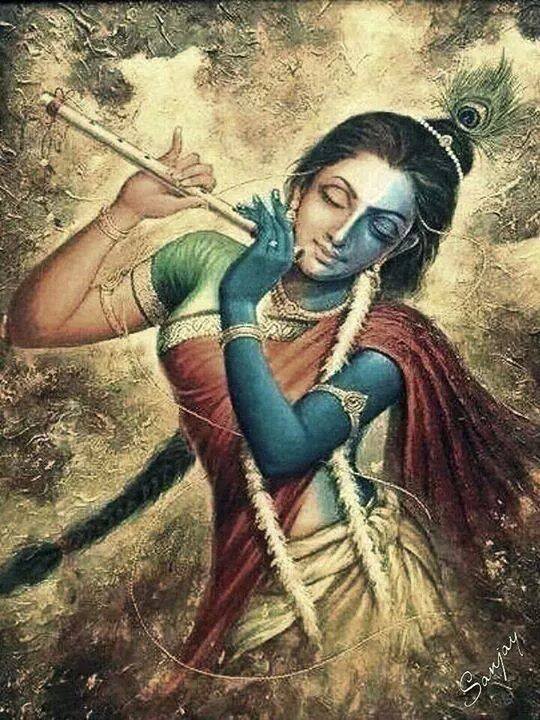
Radha-Rani sanjayThis transformation can be characterized with the help of the solve et coagula formula if you’re so inclined; something emerges once something is pulled apart. It can be framed in the formula or rot and resurrection. It can be framed as refinement and the shedding of dross. It can be framed as the dedication of aspects of the self to a higher service. It can be framed as an alignment with the spirit world and the creation of the self as a conduit for Their manifestation. There are lots of ways to think about it. But perhaps these things aren’t super important to you right now.

Perhaps right now it’s more important to sit with the idea that the absence you’re experiencing isn’t indicative of your failure or or shortcomings or flawed character. Maybe the idea that this experience is a positive one will transform these days into something more refined, as well.


http://thepaganexperience.com

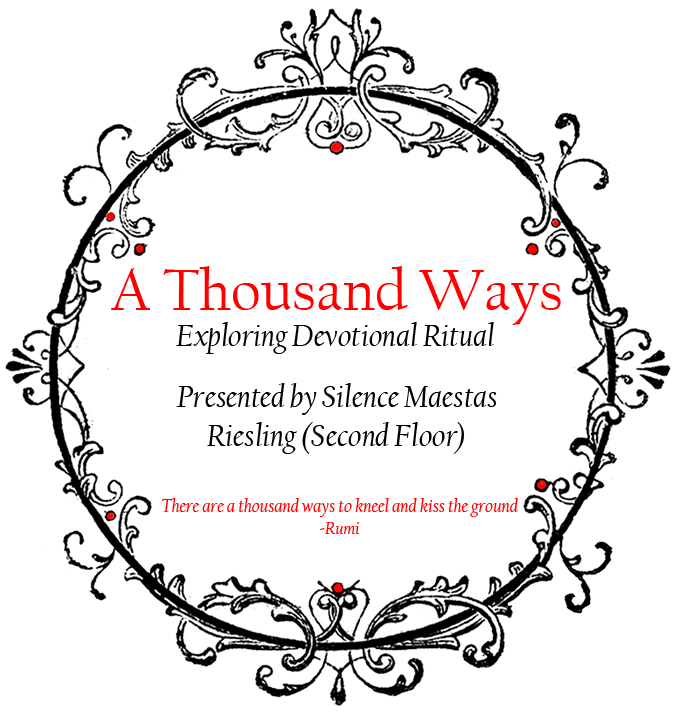
A Thousand Ways: Exploring Devotional Ritual (Pantheacon 2015)

I’ve been quite for a couple weeks because work has been busy and I’m trying to get everything squared away for my trip to San Jose. If you’d like to learn more about my session, check out the Facebook event page I’ve created for it. https://www.facebook.com/events/1555842608008750

I’m excited to be returning as a presenter for the second time and I hope to catch up with several folks and meet lots of new people. I’ll have a couple copies of my book for sale following the session if you’d like a copy.

With any luck I’ll catch up on an entry or two before I leave. I might even have some energy to make a post during the weekend. We’ll see how it goes.

Oh, and pretty soon I’ll announce the release info on a new book project I’ve been backburner-ing for some time. It’s not the followup to Heartroad (yet!) but it is the first major publishing effort I’ve made in the  last, erm, seven years.

big flyer flat