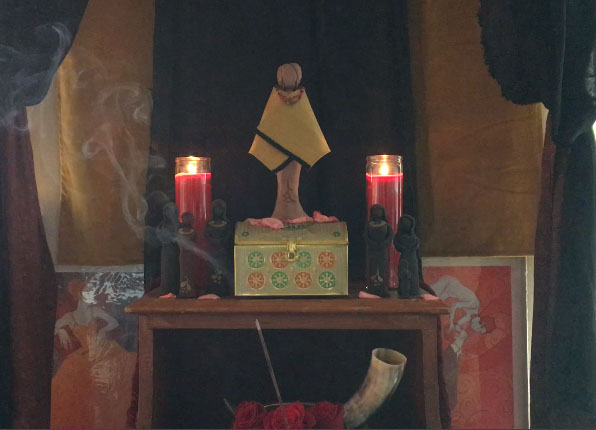
Coming April 1, 2016
Coming April 1, 2016
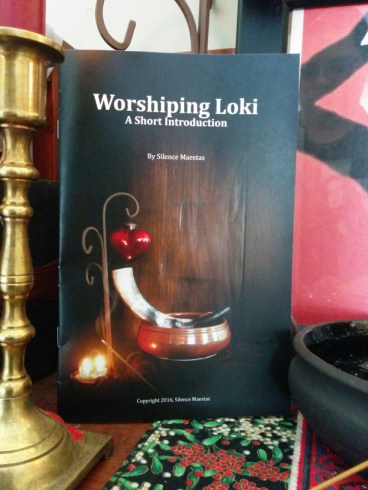
If you’ve been waiting for an electronic version of Worshiping Loki, a .pdf version is now available on Etsy. This is a convenient way to take the book along with you or to read at your leisure on any computer capable of displaying .pdf files (Adobe Acrobat). Current smart phones and tablet readers are generally capable of supporting .pdf files but I can’t answer any questions about the compatibility of particular devices with this file.
If you’re interested in a paper version, the standard copy is still available for $8 and the printer’s error edition is still available for $4.
I’m working on getting .epub and Kindle versions of the book set up. I seriously want to get the audio book version done by the end of the month but there’s another big project I’m in the midst of that is taking a lot of my attention. Thanks for your patience.
I’ve commented before that religion cannot really be separated from politics as the expression and analysis of power dynamics. Like it or not, acknowledge it or not, desire it or not, both our human experience and our religious experience are affected by the power dynamics. This is because we are already inside of these dynamics. We might seek to minimize these dynamics by rejecting human company and playing exclusively with the gods and spirits, and therefore feel free from the complications of human-human relational configurations, but at this time, in this place, in these bodies we remain politicized. Need an example? A human entity living in the United States in 2016 is strongly embedded in government bureaucracy, medical literature, inheritance law, citizenship, and a staggering number of statues, regulations, and guidelines, never mind the historic context that supports you and propels your trajectory into the future. Even if you are off the grid, without a social security number, without human company, you are still subject to the power dynamics – to the politics – of being human in this time and place because of things like air pollution, water pollution, nuclear testing, and so forth.
Some people have the privilege of being quite laissez faire about the way that power dynamics – politics – affect them, even swearing that such things have no place in (their) religion. This is, of course, demonstrably untrue because these power dynamics do affect religious expression and participation, and even our beliefs and experiences. To use just one example, in the US laws regarding religious freedom shape our potential expressions; people with the power to enforce or ignore those laws also shape those expressions. Anyone who’s ever lived in a housing situation where they had to hide their religious paraphernalia are quite aware that regardless of what the law says, people with greater political clout – people with advantage in power dynamics – can easily curtail your religious expressions and subject you to extreme consequences if you don’t fall in line.
I hate to reiterate what so many, many, *many* others have said before me but the people who are most in a position to ignore the implications of their politicized nature – that is, to ignore the fact that their embodied human self is caught in an intricate, invisible, and even intractable mesh of dynamic power relations – are the people most likely to (knowingly or unknowingly) leverage that power (that political position) against others. They are most likely to do so because it is easy. Because it allows them to create the world as they believe it needs to be. Because it lets them leave their mark, do their will, and enact their beliefs in the most efficacious manner.
*Whether we like it or not* our human selves are politicized because we are not discrete, isolated entities. We consist inherently in a state of dynamic permeation. Our forms are reflected in the forms of other human beings; we know ourselves through others. Our emotions are reflected in our fellow sentient beings; we know ourselves through others. We partake of sustenance produced by others; we create ourselves through others. We are, therefore, creatures of inherent power dynamics. Part of our fundamental nature is political.
Saying that power relations and power dynamics – politics – aren’t supposed to be part of religion is ridiculous. Whatever else contributes to the creation and expression of religion, it is a distinctly human endeavor. Even if we seek to eliminate the ways that power dynamics – politics – divide groups and distinguish one person from another, the reality of these dynamics must be acknowledged. If we don’t, then we fail to mitigate the disadvantaged position of our fellow believers and the religious body – in its personal and collective manifestations – is weakened.
I am not scared of “politicizing” religion because religion is already politicized and because religious participants are already politicized. I am not scared of acknowledging this reality and of identifying the way it impacts my beliefs and practices via its impact on my human experience. I may not necessarily agree with the ideological conclusions reached by any given analysis of power dynamics – that is, I may not share your political stance – but I’m not capable of pretending that anyone’s religion is free from these things.
Now that the programming lineup has been made public, I can happily announce that my proposal to Many Gods West 2016 was accepted. I’ll be presenting “Loving God, Becoming God: Three Tales of Apotheosis” in Olympia, WA, on the first weekend of August. I had the pleasure of presenting last year at the first MGW conference and I’m honored to be extended the opportunity to share some material that’s very meaningful to me.
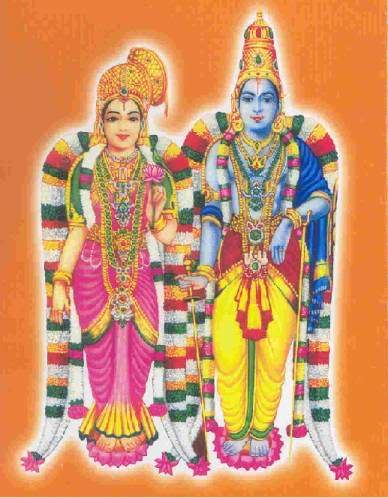
“Loving God, Becoming God” will focus on the lives of Akka Mahadevi, Sri Andal, and Mirabai, three Hindu women poet-saints, and the stories told about them. Are these stories technically apotheosis narratives and if so, what does that suggest about the nature of the divine? Can modern non-Hindu devotees approach these stories with a view towards the innate human dignity of these three women and affirm their spiritual trajectories? If we can, what implications does our affirmation hold for the way modern seekers are regarded?
I chose to speak about these three women because I feel like their stories deserve to be heard by a much wider audience. The English language academy has only relatively recently turned its attention to the amazing faith traditions recounted in the Tamil language. Though Mirabai has been written about fairly extensively in English, Sri Andal remains lesser-known especially once one leaves the academy. Akka Mahadevi often receives little more than a mention of her name in English academic works. I’ve spent years trying to learn their stories and trying – and ultimately failing – to understand their lives. My failure, I think, indicates that these women, their lives, their faith, and their compositions are always going to resist assimilation. They will continue to stand apart.
The stories of their lives exist in a twilight zone of legend, faith, literature, and history in the authoritative material sense. There is no real way to separate the threads to uncover the “real” story devoid of the subjective color of faith. Therefore religious believers may bring a particular insight to their engagement with these stories.
The women’s life stories also illustrate many of the topics that are raised and argued about in modern polytheism. Highly personalized relationships, including marriage, with the High Ones are subject to highly publicized critique. Sri Andal, Mirabai, and Akka Mahadevi each expressed their feelings for their respective spiritual Beloveds in highly romantic and marital terms and the effects of those expressions would be familiar to anyone who has participated or observed the analogous conversation today.
I love these women and their legacy. I want to share the amazing bodies of work they have left to us. I want to tell their stories and make them live again in the minds of people sympathetic to their spiritual experiences.
I’m not a scholar. I’m not an academic. I’m a religious believer deeply touched by the trials and triumphs of three women who lived centuries ago, who cared nothing for their renown or immortality but who achieved it somehow nonetheless.
If you’re in the Olympia, WA, area during the first weekend of August, I’d love to share these remarkable stories with you.
http://www.manygodswest.com/presentations/
One interesting and entirely unforeseen outcome of attending the Lokasenna ritual at PantheaCon was feeling oh so slightly inclined to go spend some time with Heathens. I’ve spent probably twice as long away from Heathenry as I did in it. Even saying I was “in Heathenry” is a bit of a stretch.
When Loki dropped into my life I was a more or less generic-flavor pagan with a spiritual and magical practice that were entirely satisfying if not necessarily spectacular or high octane. Loki changed that, tapping into little gifts and talents I already had and showing me how they could be used to much greater effect. Things sped up, got heavy, and got intense very quickly.
Thinking that the arrival of an ostensibly Norse deity in my life meant that I should go and do Norse things, I made mental noises about looking into local Asatruar groups. But no; I was prompted repeatedly that this was not what I should do with my time. So I didn’t – but I kept pushing it, thinking that I needed a peer group, people who could teach me, people who had experienced the same things I did. Thing is, I didn’t actually *need* these things. I wanted them and I didn’t recognize the difference.
Eventually I did go seeking some Heathen company. I found a large and dynamic group comprised of Asatruar/Heathen pagans and witches – which was actually possibly the highest functioning Heathen-type group I ever spent time with. Monthly rituals were always well-attended, we shared a meal afterwards, and there was much camaraderie and support. There was also a good measure of interpersonal tension between some members and when the couple whose house we met at broke up the participants all went their separate ways. I feel like that group was as successful as it was because somehow or other everyone wanted the same things – in this case, collective ritual experiences celebrating the gods and the occasional magic working.
The second Heathen group I associated with was more traditionally recon, more distinctly Asatruar. I met the gythia on a mailing list, discovered we had some Powers in common, and got to know her and her husband personally. She was a Hel’s woman and put together some lovely rituals celebrating the ancestors and the dead. That group too did not last forever and was starting to destabilize about the time that I left the region.
I won’t detail each of the handful of Heathen and Asatruar groups I associated with. Each had their own character and each, I discovered, had somewhat different focuses. Some, like the second group, built their structures according to some sort of historical basis and then infused those structures with insight and passion borne from personal practice. Others were little more than rune study groups and consisted of people who couldn’t ritual their way out of a wet sack yet somehow managed to hold symbels lasting several hours in their back yard with a scant few people. (During that disastrous ritual I fell asleep on the couch and left without saying goodbye.) Sometimes the groups were little more than a bunch of friends who happened to have similar religious predilections, which meant that they had no real ability or inclination to welcome newcomers.
At the time, I kept thinking that my inability to fit in with any group was my fault. I was doing something wrong. I was too weird, too witchy, too Lokean, too something. Now I recognize that these groups all consisted of people who simply had different religious, spiritual, and magical priorities than I did. They created or joined groups of people that shared those priorities; anyone who didn’t would not be a great fit. See, despite efforts to clearly state the singular purpose that religion serves, any observation of actual religious bodies will show that multiple ends are achieved. This is true of polytheist traditions, too. If I want to study runes, the first group would have probably been a pretty poor fit for me. If I wanted a peer group, the kindred full of shitty ritualists would have been a poor fit (and it was).
Also, I started noticing a weird pattern in the groups I associated with. No matter how well-established or functional they seemed to be when I arrived, by the time I left or started to separate myself from them shit was already starting to get tense and weird. After actual murder-suicides and other assorted felonies destroyed more than one group I spent time with, I started to wonder if perhaps I was bringing a certain destabilizing energy to each collective.
(Today I feel that yes, I did in fact have a destabilizing effect on several of these groups but not deliberately and certainly without malice. I can’t do magic or ritual with most people because I bring a radioactive flavor to their current and since people don’t know what’s happening or how to mitigate it, everything ends in tears and federal charges. I’m considerably more delicate in how I approach group workings these days and I’ve even managed to find groups that deal with heavy energy currents. I’m also upfront with the fact that I’m going to fuck things up; nothing personal and no, there isn’t anything I can do to stop it except leave. On the other hand, in exchange for the high mayhem potential of a spiritually radioactive Lokean you get someone with decades of ritual and magical experience, with a willingness to learn and teach and do the work, and with a large body of creative and artistic knowledge all ready to help your group do whatever’s important to you. At least one group leader feels this is a reasonable trade-off.)
Aside from mismatched priorities and energy dynamics, I also never felt at home in Heathenry. There’s an experience shared by many – but by no means all – Heathens irrespective of tradition, and that’s the feeling of finally arriving at a spiritual home. This never happened for me. My feelings of belonging were always simply a suspension of disbelief, a momentary shift in awareness that was always, always, always demonstrated ultimately false. These were gods I loved and prayed to, these were the rituals I did, and this was even the language of cosmology and magic I employed, but it wasn’t where I fit. Heathenry was a time and place, a style of working, a group of friends – not my spiritual path.
I realize that religious identification is a complicated matter and for some people time, place, style of working, social group, etc. are what constitutes their Heathen identity and participation in the tradition. And that’s great. For whatever reason, there were other things I wanted even if I didn’t exactly know what they were. I found Heathenry unfulfilling.
There was also the Loki issue. Groups as a whole rarely had any outright policy regarding Him (that’s one of the ways that Heathen culture has changed since I left) so it was always on an individual level that I encountered acceptance, rejection, or wary confusion. This meant that some people in a group welcomed me while others did not. Put another way: my personal spiritual choices had public consequences. This is a strange thing and it’s definitely not one that I was expecting to be as problematic as it ended up being. No matter how helpful or willing or educated or sympathetic I was, I was always pushed out by some and drawn in by others.
You don’t expect to have to justify your existence to your religious community. Having already spent time in religious communities that had required exactly the same thing of me, I knew that the only solution was to leave. One cannot fight a battle in which one’s opponents have already determined the outcome. Trying to justify the relevance of my path, my choices, and my alliances would be a terrific waste of time and win me absolutely nothing.
I am not Heathen. I’m also not not Heathen. However, I think I am too many other things, I draw from too many currents, and I bring too many perspectives to ever be a good fit for a Heathen group even if I was entirely willing to “just be Heathen” while in their company.
I’m not making a value judgment for or against myself, or for or against Heathenry. My experience is just that I’m usually a spectacularly bad fit for Heathen groups and this will eventually make everyone very unhappy.
So I’m not sure. So far as I know, there are no actual kindreds in my area. There’s a group that sort of focuses on pan-European pagan cultural traditions (Celtic, Germanic, and Norse primarily I think) but they seem little more than a coffee club. There’s no Troth presence, even if I wanted to spend time with them. A godhi I used to know is still occasionally doing something but so far as I know it’s just him and his partner. The only seidhman I ever knew in the entire state when screaming back to Mormonism. I’m also not willing to do any organizing because a Heathen group should be organized by a Heathen and also because I fear sitting around in a lot of shitty coffee shops listening to people compare notes on shitty rune manuals.
There is, however, a newly forming group of Hellenic polytheists. Despite allegiances to very different Powers, I feel like I probably have most in common with them. We have a similar stance of religious regard and even of ritual structure. At this point, it even seems like we share similar views on how revitalized polytheist traditions can fit into modern life and find contemporary expression. For the time being, I’m looking forward to spending time with them.
I have no doubt that I’ll find like-minded Heathen-types some day; I actually already have and some I’ve known for a long time. But as things stand now, Heathenry will be a sometimes food and not a primary part of my spiritual sustenance.
Alright, $4 copies of Worshiping Loki are now available! Please realize that these contain a minor printer’s error (a bit of computer code at the top of each page in the second half of the book) but the content remains entirely unaffected. If you’re looking for an economical purchase this would be a great option. I have 100 copies available so if you want more than one just message me.
And yes, I’m hard at work getting the ebook and audio book versions prepared. I’ve been knocked down with two rounds of con crud so my post-PCon recovery has gone slower than I expected. My hope is that everything will be done by the end of March – maybe even by April Fools Day!


A printer’s error has resulted in 100 copies of Worshiping Loki with a minor formatting mistake. A small string of computer code appears at the top of each page in the second half of the book. The text itself is entirely undisturbed and otherwise the books are completely identical to the standard (non-error) editions.
Since I don’t feel like I can sell these printer’s error editions for the same price as the non-error editions, I’m offing them for half price – just $4. At this price it’s easy to get extra copies to give to friends, to donate to your local pagan lending library, or to leave in strategic coffee shops.
I’ll be creating an Etsy listing for these books later today but I wanted to let you know that you aren’t out of luck if you don’t have $8 to spend. (Shipping remains the same: $2.75 US, $13.50 international – yeah, it sucks.)
There is an idea that devotional practitioners are close to the gods. There’s an idea that seekers eventually find. Any look at devotional and mystic poetry across time and place reveals that these ideas are false – or at least, not entirely true.
Where are you going,
Having lit the flames of love?
Without Your sight I enjoy no repose,
Life is suffocating and will not last.
Devotional practitioners – and perhaps polytheists and theists more generally – are keen to the proximity of their deities and spirits. After all, to one measure or another we have shaped our lives to fit the waves driven forward by their emergence into this world. We have taken up the task to become responsive and that involves becoming exceptionally vulnerable.
As that sensitivity grows we lean on Them for protection against a world that would shut down that connection, heap worries on it, layer weighty cares until we block out that proximate sensation – there are more important things to think and feel. At the point of greatest vulnerability, greatest openness to all the sensation and experience They shiningly promise, They leave.
After the sweetness comes the bitter. Does the bitterness of solitude arrive among the even, smooth rhythm of daily attention, reception, and remembrance? Oh no – we are taken to heights immediately before being left with our feet too heavy to shuffle.
How can I heal myself, O my companion?
I may crush cool sandalpaste and apply it,
I may resort to the magic of yantra and mantra,
But that sweet image has entered my heart
And the damage is done.
What went wrong?
Usually nothing.
The Powers recognized in polytheism can be handsy or aloof, attentive or dismissive, intimate or catholic as They choose. A single Power may express many different types of attention. Many of us are not used to this idea, especially when a period of solitude comes after months or years of close proximity.
What went wrong?
Usually nothing.
When it came time to deepen my work with Hela, I rebelled and kept trying to toss everything away. It was too late to undo the changes that had already been initiated and a degree of sensitivity and reception had been surpassed and would not be dampened. Knowing I could not serve without selfless love, I conducted a ritual cycle involving fasting, meditation, and some helpful rose spirits. Requisite level of submission achieved, the love finally flowed like fresh water.
When Loki is home it feels like a hot stove is lit in the corner, radiating a burn constant and familiar. I know I am home because He is home. When He is gone, all that’s left is the sharp chill of an empty furnace. My home’s heart is gone; nothing has changed but everything is different.
One can’t expect to keep the Sky-Strider around forever. That’s not His nature. Thinking to tie Him down with sweet words or promises or extracted vows is ignoring His fundamental tendencies.
Many – perhaps even most – deities are like this to one degree or another. Hela was very hands-off once my initial training was complete. I’ve heard devotees of other Powers talk about how they want the loving closeness, the happy affection, and are a little confused to discover that sometimes their Loved Ones pull back. Some of Them don’t like the mushy stuff. Their company is of a different sort and we each individually have to discover what configuration of emotional closeness, sensate proximity, and energetic sharing is going to constitute any given relationship. But this can change and this is a truth we don’t know about, not because there are people keeping secrets from us but because our reemerging traditions don’t have a lot of lore about this sort of thing. It’s up to us to tell each other the truth.
The truth is that it happens to everyone. Eventually.
I do not know how to meet my Lord.
He came into my courtyard and went,
And I only know that I missed Him.
Lots of people have talked to me about Loki’s absences. That distinct feeling of injured abandonment is more common than any of us might imagine. I remind myself that I am as common as grass, as simple as moonlight, and no more worthy of His company than anyone. Why should I expect anything different?
I don’t – but I’m always surprised to discover that the furnace blew out in the night.
A nice article on Loki over at Patheos from The Lady’s Quill.
I realize things have been all Loki, all the time around here for a while. The grand book project took a lot of time and much of that effort got shared here eventually. Even as all that has been going on (and I may talk about the rest of it at some point), my spiritual life has been growing and changing on many fronts. In the last six months or so a few people have talked to me about Santa Muerte, Saint Death. I’m sometimes a bit of an evangelist for the Saint because, well, that’s what happens. When she makes her power known in your life suddenly you have a taste for her that no one and nothing else will entirely satisfy. You become a believer, and that’s the exchange that occurs when she grants you a miracle.
This isn’t the sort of exchange most people imagine making when they petition a Power for intervention or aid. Even though on the one hand we resist thinking of the Powers as vending machines where aid is exchanged for various offerings, the concept of fair exchange is a value many polytheists hold dear. Ideally, fair exchange happens within the context of a relationship that includes intangible features such as trust. Such an exchange might be a prelude to a more complex relationship or an exchange might be a feature of the relationship that keeps the spiritual-emotional character of the bond healthy and active. (That is, I might approach a new Power with simple offerings of candles and incense in order to cultivate the first stages of a relationship with them; however, as the relationship developes in time and complexity, offerings and gifts would continue to form an important part of our interaction.)
The Saint is like this, too but she’s also a little different. What she desires from us is not so much candles or tequila or incense or candy or cigarettes (though she likes all these things and much else besides). She, perhaps more than any other Power I’ve ever encountered, is most pleased through memetic reproduction. She desires the proliferation of her idea. This is accomplished first by faith in her and in her power; this is why those who venerate her are called “believers”. (At least, this is what the believers I know call themselves but this might be a regional appellation.) As more and more people come to believe in the Saint, her image, her name, and the very idea of her spreads exponentially.
To participate in her belief is to participate in an ever-expanding global neural network. Many of the Norse polytheists and Heathen-types I know joke about our gods being like viruses; they do tend to spread as the human members of this larger community interact with one another. (Does this mean you’ll get a dose of the Loki virus hanging out with me? Possibly. I’ve seen it happen too, too many times to think otherwise but Loki also chooses who to leap to. I’d come with a warning label but I’m not terribly interested in warning people; it’d be more like a label forewarning celebration – but anyway.)
The Saint works in a very similar way – most Powers probably do, to some extent or another – but she is memetically potent to a rather exceptional degree. She travels, hopping from mind to mind, from one awareness to another, and has used the material astral known as the Internet to become a global Power in more than symbolic terms. She is highly material even as she leads us to transcendent ideas.
I can’t tell you who she is because I don’t actually know. She’s not a goddess exactly – even though researchers, believers, and even some non-believers connect her with ancient goddesses from places that are now Mexico – but I have a hard time believing she’s absolutely entirely definitely not a goddess, either. (Personally, I tend to grant her lower-case pronouns which is my individual way of distinguishing between divine and non-divine Powers but in this entry it has been a distinct struggle.) I have no real way of telling you what the difference is except that her presence doesn’t tick the same flavor, the same quality, the same reactions in me that are characteristic of divinities of any variety I’ve so far encountered. This is not an analytical category that is at all meaningful to anyone else.
I call her a Rogue Power. She seems to exist without a category, without a greater variety of which she is a part of. She has no pantheon (except perhaps for those other Rouge Powers we call “folk saints” like Saint Doctor Baby who are alike primarily by being like nothing and no one else). She certainly has a cultural context but that context is expanding and morphing even as I write this. Every interaction I’ve ever had with her suggests that she is part of everyone’s context – at least potentially, and certainly some more than others.
She is not a Power of the bourgeoisie. She is not a Power of the powerful. From her very earliest days she has been petitioned by people who had no other access to power (magic being a tool of those who had no other tools). This is why historically she was a love doctor par excellence; women whose well-being depended on staying in a stable relationship prayed to her for success in love. She is still a love doctor but is also known as a patron of queer people, sex workers, anyone working at night, anyone working in dangerous conditions, and anyone for whom magic and divine intervention are the only safeguards against disaster. Transsexuals are among her most fervent believers.
What I ask her for most is a quiet life. This is more or less what most people ask for: a quiet life and a good death. (Why might one pray for a good death? Because a bad death involves fear, pain, torment, abuse, loneliness, and abandonment. Our prayers acknowledge the fact of mortality while asking for an easy transition into the life beyond.)
I’ve been a believer in the Saint for many years. I’ve found her to be a compassionate(ish) figure that responds immediately to any petition. Any. Curses, healing, curse breaking, employment, legal victory, safety, financial success – anything. At times her presence is immensely healing and comforting; at others her energy has a distinct razor’s edge to it that warns you of your mounting debt. Gratitude should be forthcoming.
I have faith in Santa Muerte. I have faith in no one else, not like this. I love Loki, I love the Mother, I love many Powers with a depth that staggers me but an unshakable bedrock faith like this has been won only by her. I don’t know why. I don’t know how.
**
She is easy to petition. A plain white novena candle is a great place to start. Write her name on it; draw her picture if you’re feeling artistic. Fresh flowers, a glass of water, a fresh bun or pastry, and a handful of hard candy will certainly get her attention; tequila, cigarettes, cigarillos, or a joint will grab even more of her focus.
Greet her; praise her. Tell her what you want. Tell her why you want it and what you will do as a result of getting what you want. (I’ve found that her willingness to help is sweetened by describing how I will help others as a result of her aid.) Thank her and let the candle burn for a while. You can keep it lit for several days if you’re able or just when you’re praying or wish to celebrate her. I usually have her candle lit on the weekends; Friday is my day for lighting a candle to the Virgin, so Santa Muerte gets her candle lit then, too. Sunday is my particular day for the Saint just because I’m likely to be home all day and can leave the candle lit for many hours at a stretch.
Finally, expect miracles and express gratitude. That’s all there is to believing in the Saint.

 The Road, the Walker, and What Comes Next