Very slowly catching up on things here on WP. There are a couple more entries made by other people that I’d like to reblog, another installment of The Bhakti Bookshelf to post (and one to load in the queue!), and maybe even a sneaky peak at some work I’m currently putting on paper. Thanks for your patience and attention.
A New Place for Loki, pt II by Dagulf Loptson
I had the opportunity to listen to a short presentation of Loki made by Dagulf during Pantheacon 2014 in the Heathen Hospitality Suite. (At least, I believe it was him. I don’t recall the name of the speaker but the perspective put forth in the following article is the same as the presentation so I’m simply drawing a conclusion.) The suite was quite crowded after the presentation so I didn’t get to speak with Dagulf though perhaps I’ll have an opportunity in the future.
The article puts forth a detailed, well-researched consideration of Loki’s fiery role in the historic Norse tradition as extrapolated by a parallel examination of the Vedic Agni. This information may help inform the practice of those working within a Norse framework and may also help to clarify the practical and beneficial role that Loki plays within it.
Due to the pointed way in which Loki doesn’t consume the bones in Snorri’s account, it is my belief that in antiquity Loki (like Agni) was regarded to be the personification of the fire of cremation and sacrifice. In Snorri’s story, Loki represents the holy fire of cremation that separates bones from flesh, which competes against Logi, who personifies the mundane wildfire that indiscriminately eats whatever is laid in its path.
Go check it out here: http://polytheist.com/orgrandr-lokean/2014/09/23/a-new-place-for-loki-part-ii/
A Peek at Practice
Since at least one of my readers is a self-professed spiritual voyeur, I decided I’d write just a little bit about what my (near) daily practice looks like. It changes somewhat from day to day and though it hasn’t been as rigorously daily as it used to be, I’m still in front of the altar with consistency if not predictable regularity.
This post was also inspired by the recent insight I gained about the value of ritual practice, especially daily/frequent practice. For lack of any better way to articulate this, I find that ritual work lightens my karmic load. I feel lighter, cleaner, less burdened as a result of frequently doing this work; this lightness is a very particular sort of lightness and without getting too far ahead of myself, I’m hoping that, just maybe, some of my negative/unproductive wyrd is working itself out. Ritual is good for that sort of thing.
The Bhakti Bookshelf: In Praise of the Goddess – The Devimahatmya and Its Meaning
One of the blog post drafts I mentioned in my last entry was inspired by a conversation about bhakti that I had with my friend Jo (of Strip Me Back to the Bone). I thought that perhaps I’d do a series on posts about getting started studying bhakti but I quickly realized that I don’t really know exactly how to go about doing this. I can talk about the way that I have studied this particular devotional tradition but I’m not convinced of the efficacy of my particular progress and thus would not necessarily recommend it to others.
Nonetheless, I love bhakti a great deal and am in considerable debt to it and to the teachers who promote its presence in the world. I want to share my limited understanding of this passionate path and I hope to do so in a way that enhances others’ understanding and promotes meaningful conversation. With this in mind, I’ve decided to do a series of mini-reviews on the different books and materials I come across in my studies. Here’s the first!
In Praise of the Goddess: The Devimahatmya and Its Meaning by Devadatta Kali (translator and commentator) Published by Nicolas-Hays, Inc 2003

This book contains a chapter by chapter translation and commentary on the Devimahatmya (also known as the Durga Saptashi or the Chandi). The 700 verse hymn is followed by six traditional angas, or ancillary texts that complement the recitation and contemplation of the hymn. Each anga appears in Sanskrit and English and is followed by a commentary. The book begins with an introduction to the history, structure, and contents of the Chandi and concludes with the Sanskrit text. It is a sturdily bound paperback that will certainly stand up to repeated readings.
I’ve wanted a copy of the Devimahatmya for several years though specifically wanted a copy with a strong translation and helpful commentary. This edition was exactly what I was looking for. It’s a clear, well-written exploration of a text that remains central to Shakta philosophy even today.
The Shakta (goddess-centered) tradition in Hinduism contributed to the bhakti movement with many eloquent and evocative hymns and scriptures, of which this is one of the most important. Devi is portrayed as the fundamental, underlying reality upon which all possible manifestations rest; she is not removed or separate from her myriad manifestations and thus can be accessed through all levels of experience. This philosophical stance collapses the dualistic/non-dualistic conundrum and allows engagement with the divine even in a state of separation. Recognizing the Mother’s presence in all her offspring and manifestation is an important part of Shakta bhakti. This stance is similar to certain aspects of Vaishnava bhakti; a difference may be that the worshiper may more easily relate to a pervading maternal divine by virtue of already having a maternal relationship to refer to.
The Devi Mahatmya tells the story of Devi’s battles with various demons, here recognized as obstacles in the way of spiritual refinement. The text also emphasizes the role that the Mother plays in releasing her devotees from these obstacles; that is, grace is identified as a necessary part of spiritual refinement. In this there’s another similarity with Vaishnava bhakti. Perhaps most significantly, the text outlines Devi’s promises of aid and support to her worshipers and indeed to anyone who calls on her with sincerity.
This is a lovely and comprehensive volume exploring many important features of the devotional path. I definitely recommend it to anyone interested in this text or in Shakta bhakta.
Book can be purchased from Biblio.com here: http://www.biblio.com/book/praise-goddess-devimahatmya-its-meaning/d/736569872
The Highest Virtue
I’ve been under the weather for a while now and trying to catch up with lots of work. I’ve had a few new blog posts rolling around my head for a while and I even made a couple drafts but so far nothing has shaken out completely.
I’ve also been away from my blog because I was grieving for a few days. Some friends of mine had to let go a cat they’d been caring for and I was there when he passed. This was a stray cat that worked out an exchange of food an affection with these friends. They came home from work one day to find the cat injured after being struck by a car. 24 hours of intensive veterinary care later it was evident that no amount of treatment was going to give this small life a reasonable shot at life. Continued intervention would have simply prolonged a painful existence. My friend made the very difficult decision to let go of a creature she cared for deeply.
It was a hard choice and it hurt – physically hurt – every one of us there that day. I am also convinced the right choice was made. Prolonging a life filled with pain in the hopes that by some slim chance all possible surgeries were successful would have only given this animal a life still filled with pain. I couldn’t demand that this cat cope with that kind of pain and neither could my friend. It was a hard choice and it was the right choice.
I chose to watch that little life slip away. It was over and done very quickly because even though I wanted to just sit with this poor stray cat, I couldn’t allow it to linger in pain simply for my emotional satisfaction. This was not an animal I had known 12 hours before. I still cried for two days.
I came to recognize the virtue of compassion is an unexpected way. I don’t even know when it became so important but suddenly it was. None of the traditions that make up my spiritual background especially emphasis compassion and indeed in some circles it is derided as a weak and meaningless value. Without realizing it I became very concerned with adopting a compassionate stance.
Demanding that a fellow animal continue living to satisfy my emotions and sense of ethics is not compassion. I care deeply about animals and I’m especially fond of cats. Thus I have to be realistic about their native capacity to cope. Coping with chronic pain is mentally, emotionally, and physically demanding; I know from personal experience. A cat’s ability to cope is limited primarily to its ability to endure. Demanding that another creature endure continued pain because I wish to avoid the experience of grief is not right. That is not compassionate.
Compassion, I discovered, is not simply caring about or for others. Compassion encompasses a willingness to take on a burden of pain so another doesn’t suffer, so that’s what I did. This isn’t a noble statement or even a very brave one. It is simply moral.
A final twitch from the cold anesthetic was the only indication that a life was about to end. I don’t give much thought to life after death and indeed there are times when I wish fervently that there isn’t one. However, I do have some strong feelings about reincarnation for no particularly good reason. I wished very hard that this small life would find a new vessel, a new body of life without pain and without fear and without want. I’ll continue to grieve because that is the price I decided to exchange for that small freedom.
I’d do it again and I’m sure someday, I will.
Sickness on the Road
Not long ago there was a dust-up on a friend’s blog about (among other things) the existence of chronic illness in the life of someone with an intense spiritual practice and about how such an illness ought to be managed. Though a compassionate stance brings me to the conclusion that the person making management suggestions was sincere in their desire to help, the impact of the suggestions reveals their actual validity. (You can read Beth’s post here though keep in mind that this is simply one part of a larger conversation regarding the intersection of medicine, psychology, and spiritual practice. Following the various links will fill you in on other parts of the dialogue.)
I didn’t get to address this situation as it was taking place because, ironically enough, I was sick myself. Not being able to actively participate in the conversation gave me some time to think about this topic. I’ll leave aside the problematic assumptions that a person with chronic illness is not already doing everything they can to manage the complex and unpredictable nature of their particular condition(s) and instead look at the incidence of illness in the lives of people with a dedicated spiritual practice and dedicated spiritual calling.
Love and Obligation in Divine Relationship
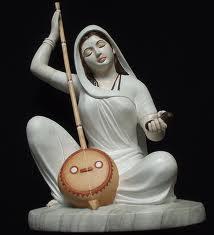
Complete surrender of the body and extreme recklessness about it and laying it down at the altar of love is considered as the highest form of sacrifice in the world. But the Lord’s devotee has yet a higher ideal.
He considers the sacrifice of the body as the lowest form of offering the devotee can make the the Lord. The standard with which the actions of the two are to be judged is, therefore, different. In the sphere of the world it is apparent that the beloved must be convinced that the lover has genuine affection for her, while she on her part must display rank carelessness in respect of her body and abhorrence for the rules of society. If such tests are applied in the base worldly love, what finer tests must not an aspirant in the region of divine love volunteer himself for; what fiery ordeal must he not pass through; what agonies must he not patiently bear before he can cross the threshold and get entrance into the portals of that more sublime region where love reigns supreme and the pleasures of which place know no surfeiting by excess.No mathematical calculation can give its idea; no formula can explain it.
The Story of Mira Bai, by Bankey Behari; pg 21
This passage refers to, among other things, the different ways that various forms of love manifest, especially in their extremity. With regards to the forms of love referred to here as worldly (finite, mortal, passing, and similarly limited), the highest expression or evidence of dedication is regarded as sacrificing the self even unto death. For the divine lover, for the devotee attached to an affectional object not finite, mortal, or passing, the highest expression is the persistence of living. That is, the degree of love that might inspire utmost self-sacrifice is but the initial level of sacred love. All the trials facing the devotee that come after this stage – well, that’s the challenge, isn’t it?
Small haul – Temple gift shop goodies
I have a tiny YouTube channel where I’ve put a few things. It started as a way to keep up with friends and I’m not terribly good at making videos but here’s a new one anyway. I wanted to share some of the neat things I picked up at a nearby ISKCon temple gift shop.
And yup, I’ll be adding transcripts to the videos soon. Ish. Soon-ish. I’ll put the transcripts here and add a link to the video descriptions.
Tiny Ganesh water pot!! It’s so exciting.
Wanting, Getting, Having
A person’s reasons for pursing any type of spiritual practice are likely to be highly personal. Even if an individual is responding to personal or group expectations about practice, these motivations are still highly intimate. Though the specifics can vary a great deal, many motivations for practice come down to, “I want to experience more of this.” This is a perfectly fine motivation and it can lead to lots of really excellent practice and revelatory experiences. However, within this basic expression of motivation is the potential for – or at least the hope for – fulfillment. This leads to the conundrum of what motivation comes after the fulfillment. This is the question that I’m considering right now.
This isn’t the first time that the question of what comes next has arisen in my practice. The continual unfolding of desire and resolution has led me to be a little more selective and specific when it comes to the articulation of personal goals. Recognizing and then acknowledging the desires that motivate me (with regards to spiritual practice and other things) has helped with the cultivation of clarity and discernment. A radical and unflinching self-honesty is required for this sort of work and it has to be constantly revisited.
So when I was clearly told that I already have that thing that I’ve been wanting, I had to take a long hard bath with myself and think about what comes next. What happens after the fulfillment of desire?
I’m sure there are several well-articulated theological arguments to support my conclusion but I can’t think of them right now. I’ll cut the ramble short: Once one’s personal needs and desires have been met, the only Right and moral thing to do is to help others.
Happy Radhastami!
The Vaishnava festival of Radhastami recently ended. This holy day honors the advent of Sri Radha on the earth and her special role in Krishna lila is celebrated.
Radha is many things at once. She is a mortal woman, a goddess incarnate, the shared essence of Sri Krishna, the utmost devotee, the queen of Vrindavan. Some aspects of Vaishnava doctrine state that Sri Radha is the power behind her Lord because he will appear when she longs for him. Radha’s worship summons the Lord and he is most pleased by receiving her selfless adoration and affection. The complex and nuanced expression of this deep relationship can be said to illustrate the many ways that worshiper and worshiped might interact with one another.
 The Road, the Walker, and What Comes Next