Handmade books, old medical books, and more!

The book sale continues! I’ve added an old medical book on dermatology and venereal diseases, a book on traditional Japanese visual art, a nice paperback on rites of passage rituals, and more. I’ve also finally added a few of the handmade books I’ve been working on for several months. These are lightweight blank journals with art paper covers. Approximately 50 pages; $12/each. Everything can be found on my Etsy shop.

MINOLTA DIGITAL CAMERA MINOLTA DIGITAL CAMERA MINOLTA DIGITAL CAMERA

Quite soon I’ll get back to regular blogging. I’ve finished nearly 2000 new words for the new book! I’ll share a sneaky-peak as soon as I clean up the draft a bit. Look forward to it!

Book Sale

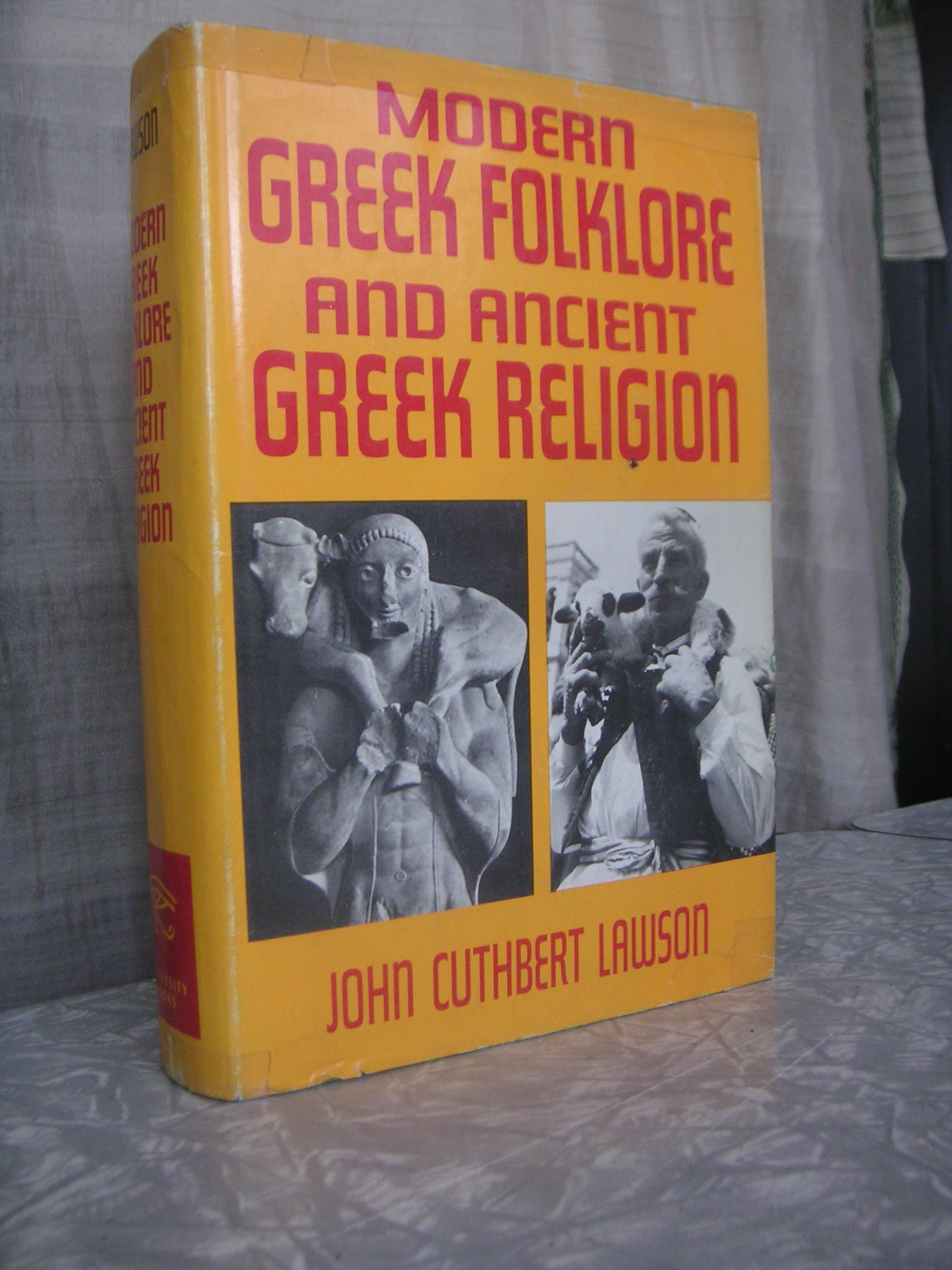
My love of books is well-known but some love affairs must come to an end. However, my loss is your gain! I have a few volumes from my vintage book collection for sale on Etsy. Perhaps most notable is the copy of Modern Greek Folklore and Ancient Greek Religion by John Cuthbert Lawson. This hefty volume is a facsimile edition of the original and was published in the 1960s; it is not one of the modern print on demand copies. It contains all the black and white photographic plates, unlike many of these print on demand volumes.

Modern Green Folklore and Ancient Greek Religion

Check out this and other books on my Etsy shop. I’ll let you know as I add more items throughout the weekend.


On Grief, Grieving, and why I don’t think Bifrost and the Rainbow Bridge are the same – Reblogging

This is a second post by Jo speaking specifically to grief. I should perhaps say that I don’t think the Rainbow Bridge fable is the perfect solution to the grief we feel at losing a beloved animal. It is, however, virtually the only commemoration of a non-human life I can think of (I recall an article I found about a Buddhist ceremony sponsored by a Japanese medical research company to honor the lives of animals killed in their work and some particular Hindu ancestor ceremonies include animals in the ranks of dead that receive offerings).

Of course, we must also question why grief is counted as such a destructive emotion. It can be – but it doesn’t have to be. Is the reason that human hate, fear, or greed hasn’t damaged the sacred universe only due to the lack of a straightforward fable?

None of this is to argue with the author of the original post regarding the damage we humans have supposedly done to the Gods’ own bridge by way of our natural and instinctive reaction to loss. This is, at most, a counterpoint to the assignation of blame to people who don’t even believe in the existence of Bifrost. Assuming responsibility or even accountability for such perceived harm is largely unproductive. If indeed Bifrost suffers for the weight of non-human animals that were wildly loved how must the rest of the cosmos suffer for the weight of non-human animals that were tormented every day of their existence and whose only value was realized by their death? That, perhaps, is the damage we should feel most accountable for.

On Grief, Grieving, and why I don’t think Bifrost and the Rainbow Bridge are the same.

A Problem with a Human-centric View of the Spirit Worlds – Reblogging

Putting my thoughts on this subject into words is very difficult; one of the reasons it took me so long to share this piece by Jo was that I was trying to get my thoughts in order. While yes, I do believe that human thoughts and feelings have an impact on the Universe, I find that we (as humans) are most able to affect the things most closely aligned with us. Our grief, sorrow, joy, ambition, and frustrations are not likely to, for instance, change the course of a stream in Alfheim or make a ripple in the deepest pools of Niflheim. A rockslide in Jotunheim is probably not directly related to the rise and fall of human achievements and connecting the two (without additional evidence) is probably giving us too much credit.

Bifrost is not ours. It is not ours to harm or even to heal. It is not the only path between the worlds (else why would Thor have His chariot?) and even if it were, would the echoes of collective human grief so much as reach its foundations? What makes our grief so potent that it has such an impact?

The story of the Rainbow Bridge came about, I believe, because we have no convenient way of talking about the grief we feel for losing the animals we love. English lacks even the vocabulary that might allow us to name what these relationships are. I always come up empty when I try to talk about what I feel for the animals in my life. I call them family, I call them friends, but these words are not ideal or even all that accurate. They are a borrowed vocabulary pressed into service because nothing else is available.

The Rainbow Bridge is a symbol that provides a context for grief and a ritual of comfort in a culture that lacks meaningful ways to express love and sorrow for our non-human animal kin. Bifrost is a part of universal architecture. One is a product of human imagination created to meet our distinctive need to mourn, remember, and feel comforted. The other belongs to a highly specific cosmology and is primarily relevant to the Powers most closely aligned with that cosmology. I love and respect the Norse Powers and yes, I care about the integrity and well-being of the Nine Worlds and all that’s in them. However, the Worlds do not resound to my frustrations, triumphs, or even griefs. If they did, why is the sacred firmaments not trembling from the endless emotional pain of animals being slaughtered? Why have the holy halls not shuddered from the 7 billion suffering humans? If the agony radiating from this single World has not managed to upset the fundamental function of the sacred universe, I cannot be concerned with the impact of a single modern story of comfort. If I was, my priorities would be misplaced.

http://naiadis.wordpress.com/2014/10/12/the-problem-of-a-human-centered-view-of-the-spirit-worlds


Catching up

Very slowly catching up on things here on WP. There are a couple more entries made by other people that I’d like to reblog, another installment of The Bhakti Bookshelf to post (and one to load in the queue!), and maybe even a sneaky peak at some work I’m currently putting on paper. Thanks for your patience and attention.

A Peek at Practice

Since at least one of my readers is a self-professed spiritual voyeur, I decided I’d write just a little bit about what my (near) daily practice looks like. It changes somewhat from day to day and though it hasn’t been as rigorously daily as it used to be, I’m still in front of the altar with consistency if not predictable regularity.

This post was also inspired by the recent insight I gained about the value of ritual practice, especially daily/frequent practice. For lack of any better way to articulate this, I find that ritual work lightens my karmic load. I feel lighter, cleaner, less burdened as a result of frequently doing this work; this lightness is a very particular sort of lightness and without getting too far ahead of myself, I’m hoping that, just maybe, some of my negative/unproductive wyrd is working itself out. Ritual is good for that sort of thing.

Continue reading

Wanting, Getting, Having

A person’s reasons for pursing any type of spiritual practice are likely to be highly personal. Even if an individual is responding to personal or group expectations about practice, these motivations are still highly intimate. Though the specifics can vary a great deal, many motivations for practice come down to, “I want to experience more of this.” This is a perfectly fine motivation and it can lead to lots of really excellent practice and revelatory experiences. However, within this basic expression of motivation is the potential for – or at least the hope for – fulfillment. This leads to the conundrum of what motivation comes after the fulfillment. This is the question that I’m considering right now.

This isn’t the first time that the question of what comes next has arisen in my practice. The continual unfolding of desire and resolution has led me to be a little more selective and specific when it comes to the articulation of personal goals. Recognizing and then acknowledging the desires that motivate me (with regards to spiritual practice and other things) has helped with the cultivation of clarity and discernment. A radical and unflinching self-honesty is required for this sort of work and it has to be constantly revisited.

So when I was clearly told that I already have that thing that I’ve been wanting, I had to take a long hard bath with myself and think about what comes next. What happens after the fulfillment of desire?

I’m sure there are several well-articulated theological arguments to support my conclusion but I can’t think of them right now. I’ll cut the ramble short: Once one’s personal needs and desires have been met, the only Right and moral thing to do is to help others.

Continue reading