New Book: Further Along the Heartroad

Further Along the Heartroad! It’s a thing! Or it will be – eventually.

I’ve talked for a year or so about a follow-up to Walking the Heartroad and in all honesty, this new book has been in the works for quite a bit longer than that. For better or worse this second volume is not going to be finished quickly. Most of this has to do with the fact that I do actually write for a living which means that all my energy is given over to writing copy for drain cleaning products and not to writing books for you guys. Don’t feel sad, though; having a professional writing job has made me a much better writer and I feel reasonably confident that Further Along will be a much stronger book than the first volume. It will also be quite a bit longer, a little broader in scope (not addressing spirit workers specifically), and a lot more detailed.

Here’s the sneaky peek you’ve all been waiting seven years for. It’s just a portion because, well, I want to protect my work and I don’t want to give away all the secrets right away (plus certain aspects of the outline might change). I also included a 20-page excerpt of material from this book in the Kindle edition of Heartroad and I’ll probably share other previews as the project progresses; watch this space.

I need to thank absolutely everyone who has supported and who continues to support this very humble work of mine. Articulating the self-aware emergence of a devotional current within paganism and polytheism has been a greater adventure than I ever might have expected to take part in.

Continue reading

An Outsider’s View of God-Spousery.

A well-written consideration of sacred marriage from an observer. I feel the author really gets to one of the primary points of this topic by saying that marriage, in itself, is not an achievement; rather, it’s the commitment that’s the real achievement.

My personal perspective is that undertaking this particular path is (among other things) a very strong commitment to one’s own potential. It’s a way of saying (among other things) “I want to see how far this particular path takes me, I want to know how far I can take this path with me.” In many ways, it is like undertaking a serious form of initiation. It will utterly change you not as a result of the incident itself, but as a result of the dedication the initiate applies to living in the aftermath.

Thenea's avatarMagick From Scratch

“Let us go, my Beloved, to greet the Bride
The Queen’s Whole Self shall we welcome”
— From L’kha Dodi, the Jewish Evening Sabbath service.

From: http://spiritualityireland.org/blog/index.php/2012/08/first-same-sex-buddhist-wedding-held-in-taiwan/ From: http://spiritualityireland.org/blog/index.php/2012/08/first-same-sex-buddhist-wedding-held-in-taiwan/

The term “god-spouse” always seems to carry with it a discussion.

“Can a person really be married to a deity?”

“Are they claiming equality to that divinity, and are they really any closer to them than the rest of us?”

“If someone claims to be a god spouse, I expect them to be exceptionally devoted.”

“I can’t imagine that the gods pick and choose favorites.”

While most of the discussion that non-god-spouses seem to have about the phenomenon focuses on the idea of legitimacy, I have an entirely different question to ask. What does it mean? Why have the gods chosen to do this?

Why am I even exploring this issue? My apologies to all the various and sundry god-spouses out there. You fascinate…

View original post 1,724 more words

Love and Obligation in Divine Relationship

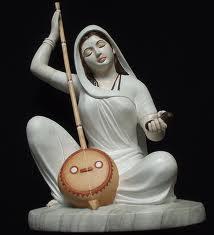
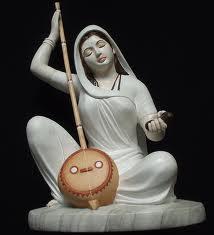
Complete surrender of the body and extreme recklessness about it and laying it down at the altar of love is considered as the highest form of sacrifice in the world. But the Lord’s devotee has yet a higher ideal.

He considers the sacrifice of the body as the lowest form of offering the devotee can make the the Lord. The standard with which the actions of the two are to be judged is, therefore, different. In the sphere of the world it is apparent that the beloved must be convinced that the lover has genuine affection for her, while she on her part must display rank carelessness in respect of her body and abhorrence for the rules of society. If such tests are applied in the base worldly love, what finer tests must not an aspirant in the region of divine love volunteer himself for; what fiery ordeal must he not pass through; what agonies must he not patiently bear before he can cross the threshold and get entrance into the portals of that more sublime region where love reigns supreme and the pleasures of which place know no surfeiting by excess.No mathematical calculation can give its idea; no formula can explain it.

The Story of Mira Bai, by Bankey Behari; pg 21

This passage refers to, among other things, the different ways that various forms of love manifest, especially in their extremity. With regards to the forms of love referred to here as worldly (finite, mortal, passing, and similarly limited), the highest expression or evidence of dedication is regarded as sacrificing the self even unto death. For the divine lover, for the devotee attached to an affectional object not finite, mortal, or passing, the highest expression is the persistence of living. That is, the degree of love that might inspire utmost self-sacrifice is but the initial level of sacred love. All the trials facing the devotee that come after this stage – well, that’s the challenge, isn’t it?

Continue reading

Happy Radhastami!

The Vaishnava festival of Radhastami recently ended. This holy day honors the advent of Sri Radha on the earth and her special role in Krishna lila is celebrated.

Radha is many things at once. She is a mortal woman, a goddess incarnate, the shared essence of Sri Krishna, the utmost devotee, the queen of Vrindavan. Some aspects of Vaishnava doctrine state that Sri Radha is the power behind her Lord because he will appear when she longs for him. Radha’s worship summons the Lord and he is most pleased by receiving her selfless adoration and affection. The complex and nuanced expression of this deep relationship can be said to illustrate the many ways that worshiper and worshiped might interact with one another.

Continue reading